How GCC Banks Use Rewards to Increase Card Spending
- Editorial & Research Team
- |
- Published on November 5, 2026
On this page
Share Article


- Cashback, reward points and exclusive benefits encourage customers to use bank cards more frequently for everyday purchases.
- Personalised rewards based on customer spending habits help banks improve engagement and make offers more relevant.
- Merchant partnerships with retailers, restaurants, fuel providers and travel brands create additional reasons for customers to choose a particular bank card.
- Banks should track card activation, transaction frequency, reward redemption and incremental spending to measure the actual impact of loyalty programmes.
- Loyalty management software helps banks manage reward structures, automate campaigns, coordinate merchant partnerships and measure programme performance.
Banking loyalty Programs are becoming an important part of how financial institutions across the Gulf Cooperation Council (GCC) encourage card usage, improve customer engagement and strengthen long-term relationships.
As digital payments become more common across the UAE, Saudi Arabia, Kuwait, Qatar, Bahrain and Oman, banks are looking beyond traditional credit card benefits. Cashback, reward points, merchant discounts, travel privileges and personalised offers are increasingly being used to give customers more reasons to choose one card over another.
However, offering rewards alone does not guarantee increased card spending. Banks need to understand customer behaviour, identify relevant spending opportunities and deliver benefits that encourage customers to use their cards more frequently.
According to Visa’s 2026 Where Cash Hides research, based on a survey of 1,200 consumers across the GCC, digital payment adoption is continuing to grow. In Saudi Arabia, 67% of consumers are largely non-cash users, while in the UAE only 16% of consumers still use cash for everyday purchases.
For banks, this shift creates an opportunity to use loyalty Programs not just as a customer benefit, but as a strategy for increasing card engagement and transaction activity.
Why Are GCC Banks Investing in Card Rewards Programs?
Banks operate in a competitive financial services market where customers can hold multiple cards and choose different payment methods depending on the transaction. In the UAE, RFI Global’s H1 2026 research found that 98% of consumers use more than one financial provider, with an average of 3.2 institutions per person.
A customer may use one card for groceries, another for travel and a third for online shopping. Having a customer open a credit card does not necessarily mean that the card becomes their preferred payment method.
This is where rewards Programs can make a difference. A well-designed card loyalty program gives customers additional value when they choose a particular card for everyday purchases.
For banks, the potential benefits include:
- Increasing card activation and transaction frequency.
- Encouraging customers to use cards for everyday purchases.
- Building stronger customer relationships.
- Increasing engagement with banking applications.
- Developing partnerships with merchants and lifestyle brands.
- Improving customer retention and cardholder lifetime value.
The GCC Loyalty Index, published by Dragonpass in February 2026, provides useful insight into regional customer expectations. Its findings show that transactional rewards account for 34% of the loyalty drivers studied, while trust represents 24% and recognition 14%. More than eight in ten respondents (82%) said perks play an important role in their decision to engage with a loyalty programme.
This suggests that customers value clear, tangible benefits, but banks also need to build trust and provide experiences that recognise individual preferences.
5 Ways GCC Banks Use Rewards to Increase Card Spending
1. Cashback to Encourage Everyday Card Transactions
Cashback is one of the easiest reward mechanisms for customers to understand. Instead of collecting points that may require additional steps to redeem, customers receive a percentage of eligible spending back as a reward.
Banks can use cashback to encourage card usage across categories such as groceries, dining, fuel, shopping and online purchases.
For example, in June 2026, Mashreq introduced its Everyday Cashback programme in partnership with Visa and Rezolve Ai. The programme gives eligible Mashreq debit and credit cardholders access to cashback offers of up to 20% at hundreds of participating merchants in the UAE and internationally, tracked directly in the Mashreq app.
The programme also uses data-driven personalisation to match offers with individual customers.
How it helps banks: Relevant cashback offers can encourage customers to choose their bank card for eligible transactions, increase merchant engagement and create additional opportunities for everyday card usage.
2. Reward Points to Build Long-Term Card Engagement
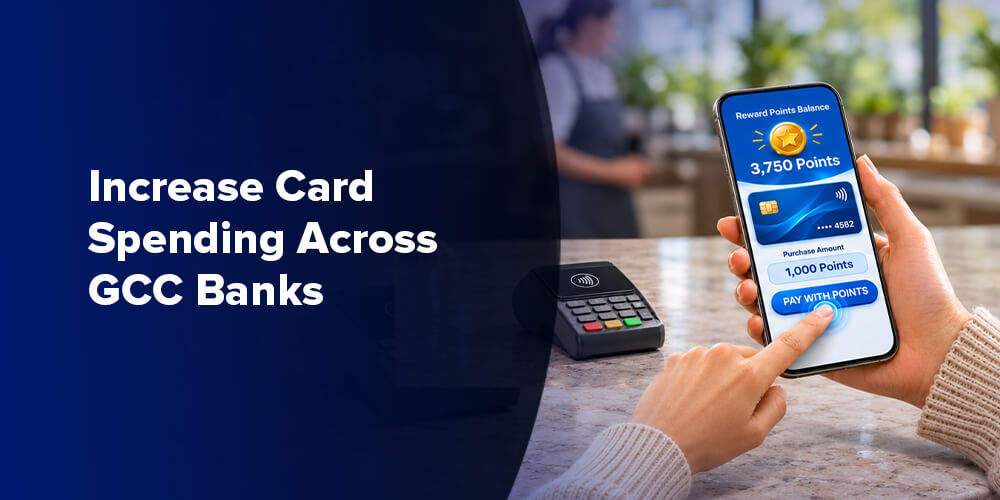
Points-based Programs give customers an ongoing reason to use their cards. Customers earn points on eligible transactions and redeem them for products, vouchers, cashback, travel or other benefits.
The more useful the redemption options, the easier it becomes for customers to understand the value of participating.
For example, First Abu Dhabi Bank’s FAB Rewards programme allows eligible customers to earn rewards through credit and debit card spending, and its broader proposition also covers selected banking relationships and digital banking interactions. Customers can redeem rewards at the point of sale, against card statements, for utility bills or by converting them into Emirates Skywards, Etihad Guest or Shukran.
In Kuwait, Gulf Bank’s enhanced Gulf Points programme lets credit cardholders redeem points as cashback, for flights and hotels, through an in-app store, or share them with family and friends.
Banks can use different earning structures to encourage spending across selected categories while giving customers multiple redemption choices.
How it helps banks: Points can create a longer-term engagement cycle. Customers accumulate rewards through transactions and return to the programme to explore and redeem available benefits.
3. Merchant Partnerships to Expand Card Usage
Customers do not always choose their payment card based on the bank alone. Discounts, cashback and exclusive benefits at popular merchants can influence their payment decisions.
Banks can partner with retailers, restaurants, fuel companies, travel providers and ecommerce businesses to create card-linked offers. These partnerships can provide customers with relevant benefits while helping merchants attract additional transactions.
For example, banks can offer:
- Dining discounts at participating restaurants.
- Cashback on grocery purchases.
- Special offers at fuel stations.
- Travel and hotel benefits.
- Exclusive ecommerce promotions.
How it helps banks: Merchant partnerships extend the value of a card beyond traditional banking services. They also create opportunities to target specific spending categories and attract customers who regularly engage with participating brands.
4. Personalised Rewards to Influence Customer Spending Behaviour
Not every customer has the same spending habits. Some frequently shop online, while others spend more on travel, dining, groceries or fuel. Offering identical rewards to every cardholder can reduce programme relevance.
AI and customer analytics can help banks understand spending patterns and develop more targeted engagement strategies. For example, a bank could:
- Identify customers who rarely use their credit cards.
- Recognise changes in transaction frequency.
- Recommend offers based on eligible spending categories.
- Identify customers who may respond to travel or lifestyle benefits.
- Automate relevant campaigns for inactive cardholders.
Personalised offers can make customers more likely to notice and use available benefits.
How it helps banks: Rather than increasing promotional activity across the entire customer base, banks can focus rewards on customers and spending categories where additional engagement is commercially valuable.
Banks should use customer data responsibly, follow applicable privacy requirements and measure incremental transactions rather than assuming every rewarded purchase represents new spending.
5. Co-Branded Cards to Connect Banking with Everyday Spending
Co-branded cards bring together a bank and a merchant, retailer or service provider to offer benefits linked to a particular customer ecosystem. These Programs can connect banking with fuel purchases, shopping, travel and other recurring activities.
A useful GCC example is the ADNOC Rewards Credit Card, launched in December 2025 through a partnership between ADNOC Distribution, FAB and Mastercard.
The card offers 15% back in ADNOC Rewards points on ADNOC fuel, car care and Oasis convenience store purchases, 3% on parking and tolls, 1% on other domestic spending and 2% on international spending.
Customers can redeem points across the ADNOC ecosystem, including fuel, EV charging, car wash and lube services, and offers from 120+ brands. Points can also be converted into e& Smiles, Shukran or Etihad Guest Miles.
How it helps banks: Co-branded cards create a stronger connection between everyday spending and the bank’s payment product. They also provide opportunities for merchant acquisition, customer engagement and differentiated card propositions.
What Should GCC Banks Measure to Understand Rewards Programme Performance?
A rewards programme should be evaluated through actual business outcomes rather than membership numbers alone. Banks should monitor the following metrics:
| Metric | What it measures |
|---|---|
| Card activation rate | Percentage of issued cards that become active |
| Transaction frequency | Number of transactions per active card |
| Average transaction value | Average amount spent per transaction |
| Monthly card spend | Total eligible spending across active cards |
| Reward redemption rate | Percentage of issued rewards redeemed |
| Repeat card usage | Frequency of returning cardholders |
| Incremental spending | Additional spending generated by the rewards programme |
| Customer retention | Ability to maintain active cardholder relationships |
One important distinction is between transaction growth and incremental spending. A customer may simply move an existing purchase from another card to the bank’s card. That increases the bank’s transaction share but does not necessarily increase the customer’s total spending.
Banks should therefore use appropriate campaign comparisons and control groups to understand whether rewards are generating genuinely additional transactions.
Responsible programme design should also avoid encouraging customers to accumulate unnecessary credit card debt merely to earn rewards.
How Loyalty Management Software Helps Banks Manage Card Rewards
As banking rewards Programs expand, managing different earning rules, merchant partnerships, customer segments and redemption options becomes increasingly complex. A loyalty management platform can help financial institutions coordinate these activities through a centralised technology framework.
Important capabilities include:
- Flexible reward configuration: Create different earning and redemption rules for card categories and customer segments.
- Merchant and partner management: Coordinate offers and rewards across participating businesses.
- AI-powered personalisation: Develop relevant offers using permitted customer insights.
- Campaign automation: Manage targeted promotions and customer engagement journeys.
- Reward management: Track points, cashback, redemption and reward liabilities.
- Analytics and reporting: Monitor transaction activity, programme performance and customer engagement.
The right platform should also integrate with existing banking systems, card processing infrastructure, CRM platforms and digital banking applications.
How Novus Loyalty Supports Banking and Financial Institutions
For banks looking to improve card engagement and customer retention, a flexible loyalty management solution can help connect rewards with broader customer engagement strategies.
Novus Loyalty offers enterprise loyalty management and customer engagement capabilities that support reward programme configuration, campaign automation, partner incentives and AI-powered personalisation.
Financial institutions can explore how these capabilities support different customer segments, merchant partnerships and engagement objectives.
The focus should be on building Programs that are easy for customers to understand, operationally manageable for banks and measurable from a business performance perspective.
Final Thoughts
Rewards Programs are becoming an important tool for GCC banks looking to strengthen card engagement and encourage everyday payment activity.
Cashback, points, merchant partnerships, personalised offers and co-branded cards each provide different ways to create value for cardholders.
However, the success of a programme depends on more than attractive reward rates. Banks need to understand customer preferences, make redemption convenient, manage reward costs and measure the additional business value generated.
By combining customer insights, flexible reward structures and effective loyalty management technology, GCC banks can build card Programs that support stronger engagement, increased transaction activity and sustainable customer relationships.
Explore Bank Loyalty
Build compliant, scalable loyalty programs for banking customers.