From Football Fever to Customer Loyalty: FIFA World Cup 2026 Marketing Strategies
- Editorial & Research Team
- |
- Published on June 18, 2026
On this page
Share Article


- The most successful brands are moving beyond traditional promotions and using loyalty-led experiences to stay relevant long after the tournament ends.
- From global sponsors to non-sponsors, brands are finding innovative ways to capture attention and create memorable customer experiences during FIFA 2026.
- Gamification, exclusive rewards, and fan participation are emerging as powerful tools for turning tournament excitement into meaningful customer engagement.
The FIFA World Cup 2026 is already rewriting the record books before the tournament reaches its final whistle. With 48 teams, 104 matches, and three host nations, the United States, Canada, and Mexico, it is officially the largest FIFA World Cup in history. FIFA has also confirmed that all global sponsorship packages for the tournament were sold out well ahead of kickoff, highlighting unprecedented commercial interest from brands worldwide.
For brands around the world, the FIFA World Cup 2026 arrives at a pivotal moment. Football’s global reach is unmatched, connecting billions of fans across continents through a shared passion for the game. At the same time, customer expectations are evolving rapidly. Consumers are looking beyond discounts and transactions, choosing brands that deliver personalised experiences, meaningful rewards, and ongoing value. Against this backdrop, the world’s biggest sporting event offers far more than visibility; it provides a rare opportunity to capture attention, inspire engagement, and turn moments of excitement into lasting customer loyalty. Smart companies understand one thing: when a team scores a goal, it will create enthusiasm; loyalty provides revenue for life.
Why FIFA World Cup 2026 Matters for Marketers
Every four years, there is an opportunity for the FIFA World Cup to be one of the biggest and most viewed sporting events in the world, with billions of viewers, increased conversational activity via social media, and increased consumer spending in various industry categories.
Traditional advertising campaigns do not establish as strong an emotional relationship with consumers on a mass scale as the World Cup does.
During the course of the World Cup, viewers celebrate and discuss their team’s wins or losses from the previous match, predict the outcome of the next match, and often interact with brands involved in the Match Experience.
This unique experience offers businesses an opportunity to:
- Increase customer engagement
- Drive repeat purchases
- Acquire new customers
- Strengthen brand affinity
- Boost loyalty programme participation
- Collect valuable first-party customer data
The brands generating the highest returns from major sporting events are no longer focusing solely on awareness. They are using loyalty strategies to convert short-term excitement into long-term customer relationships.
The Shift from Promotions to Loyalty
In previous World Cups, brands primarily focused on:
- Discounts
- Sweepstakes
- Ticket giveaways
- Limited-time promotions
While these tactics generated attention, many delivered only temporary results.
Today’s leading brands are taking a different approach. Instead of asking: “How can we get customers to buy today?” They are asking: “How can we keep customers engaged for the next 12 months?”
This shift has given rise to loyalty-driven World Cup campaigns. The objective is no longer just transactions. It is an ongoing engagement.
How Global Brands Are Leveraging FIFA World Cup 2026
The FIFA World Cup has become a place where companies can engage with their audience using creative methods and the enthusiasm of their fans to create ongoing relationships that will build customer loyalty for years to come. The objective of these actions is to have the consumer actively associate themselves with the brand well past the moment of the last whistle.
Coca-Cola
Coca-Cola’s FIFA World Cup 2026 initiative, “Uncanned Emotions,” shows that a basic concept can provide significant amounts of consumer interaction.
This project was completed by placing FIFA stickers below the labels on their Bottles. By having a sticker/album, Consumers have a chance to collect, exchange, and complete their official tournament sticker album. This is an excellent example of how an effective way of promoting brand loyalty is to promote repeated behaviour.
Those who wish to collect all of their items in their sticker album will continue to purchase the product throughout the duration of the event. Through the excitement created with new stickers on several occasions, when you purchase cola, you will keep coming back to the brand for an extended time, as well as for a different reason than normal.
Marketers can take note; loyalty isn’t all about rewards! Sometimes it only takes a simple reason to cause your customers to make repeated purchases.
DoorDash, Deliveroo & Wolt
In many people’s minds, football and ordering food are now practically synonymous, resulting in DoorDash launching an entire campaign based on that premise.
As an Official Tournament Supporter, DoorDash has combined its international brands of Deliveroo and Wolt into one FIFA World Cup promotion known as “Deliver Us to Futbol” (futbol is Spanish for football), which will promote the culture of football worldwide by offering special pricing, savings, and delivery offers on specific restaurants throughout the FIFA World Cup.
What makes this campaign successful is the fact that it directly aligns with customer behaviour; fans are already consuming food and beverages as they watch their team compete. Each time they order something to enjoy while watching a football match, this creates an opportunity to build loyalty through offering these types of incentives and rewards.
This is a key lesson for any business that operates a loyalty programme: many of the most successful programmes provide and implement incentives or rewards that integrate smoothly with existing customer behaviours, rather than requiring customers to alter their current practices.
Adidas
Fan engagement has been significantly enhanced by the collaboration of Adidas’ AdiClub with FIFA Rewards. As a result of linking each membership, users can access additional points, receive limited-edition product offerings, and achieve entry into contests for tickets to the FIFA World Cup Final.
Included in this campaign are exclusive FIFA World Cup mini-ball sets that can be redeemed through FIFA Rewards. Each item is available for 10,000 points and only 10 globally, demonstrating a scarcity promotion to create urgency while exhibiting how physical prizes contribute to added value to a loyalty program.
Brands can learn from their campaigns that customers are just as driven by exclusivity and unique experiences as they are by traditional discounting.
American Airlines
American Airlines has developed a loyalty activation that focuses entirely on experience rather than products.
Through its AAdvantage programme, selected members have the opportunity to attend an exclusive FIFA World Cup Final watch event at Edge NYC in Hudson Yards. Located more than 100 stories above New York City, the venue combines panoramic views with an immersive viewing experience, transforming a football match into a memorable loyalty reward.
For brands, this demonstrates the growing appeal of experiential rewards. While points and discounts remain valuable, unforgettable experiences often create stronger emotional connections and long-term brand affinity.
Levi’s
FIFA’s venue branding rules required Levi’s Stadium, one of the FIFA World Cup host venues, to temporarily operate without its corporate-sponsored name during tournament events. Instead of seeing this as a limitation, Levi’s turned it into a marketing opportunity by running advertisements that read: “The stadium formerly known as Levi’s® Stadium.”
The campaign cleverly acknowledged FIFA’s restrictions while ensuring the brand remained part of the conversation. It serves as a reminder that during major sporting events, creativity can sometimes generate more attention than sponsorship itself.
Hyundai
Hyundai’s FIFA World Cup marketing effort is encouraging consumers to interact and become involved with the brand through the theme, “Next Starts Now”. By entering into a Hyundai test drive, consumers will be entered for a chance to win a four-day trip for two people to a host country and tickets to the group stage matches of the FIFA World Cup. This type of promotion aligns well with Hyundai’s position of being innovative and provides incentives to visit dealers and interact with Hyundai representatives to develop lasting connections between consumers and Hyundai.
This campaign also illustrates how some brands can build loyalty/engage their customers through promotions versus simply creating passive awareness.
Nuuly
Tickets and merchandise are not the only ways that a FIFA World Cup can take shape.
The Fashion rental platform Nuuly launched its “Summer of Soccer” collection, which allows its subscribers to wear football-inspired apparel, team colours, jerseys, and sporty fashions during the tournament.
The campaign helps to demonstrate how changing consumer behaviour among younger consumers is valuing access and flexibility more than ownership. By creating an opportunity for its subscribers to have a football culture through their subscription, Nuuly builds relevance in the context of their business and reinforces customer loyalty.
The Loyalty Playbook Winning During the FIFA World Cup 2026
Brands that succeed during major sporting events typically combine promotions with engagement mechanics.
1. Predict-and-Win Campaigns
Fans love sharing predictions. Brands can reward customers for:
- Match predictions
- Score predictions
- Tournament outcomes
- Player performance forecasts
2. Gamified Challenges
Gamification remains one of the most effective loyalty strategies.
Examples include:
- Daily quizzes
- Match-day challenges
- Trivia contests
- Interactive polls
3. Tier-Based Rewards
Premium customers want premium experiences.
Brands can offer:
| Loyalty Tier | FIFA-Themed Reward |
|---|---|
| Silver | Bonus points |
| Gold | Exclusive merchandise |
| Platinum | VIP experiences |
| Elite | Hospitality packages |
4. Referral Campaigns
Football is social. Referral programmes can leverage this behaviour by rewarding customers who invite friends to join loyalty programmes during the tournament.
5. Limited-Time Rewards
The fear of missing out remains a powerful motivator.
Examples include:
- World Cup merchandise
- Exclusive vouchers
- Match-day offers
- Collectible digital rewards
Industries That Can Benefit Most from FIFA World Cup 2026 Loyalty Campaigns
Many businesses assume FIFA marketing is only relevant to sports brands. In reality, the World Cup creates opportunities across retail, hospitality, travel, financial services, telecommunications, and entertainment because it combines massive audience reach with exceptionally high emotional engagement.
Retail
Retailers can use the tournament to drive both sales and loyalty through:
- Match-day promotions
- Bonus points events
- Loyalty-exclusive offers
- World Cup merchandise rewards
Hospitality
Hotels, restaurants, sports bars, quick-service restaurants, and entertainment venues can reward customers for:
- Match viewing attendance
- Group bookings
- Food and beverage purchases
- Repeat visits
Airlines and Travel
Travel brands can launch:
- Bonus points promotions
- FIFA-inspired travel experiences
- Loyalty redemption campaigns
- Tier-status accelerators
Financial Services
Banks and payment providers can encourage usage through:
- Cashback campaigns
- Reward points multipliers
- Exclusive member benefits
- FIFA-themed spending rewards
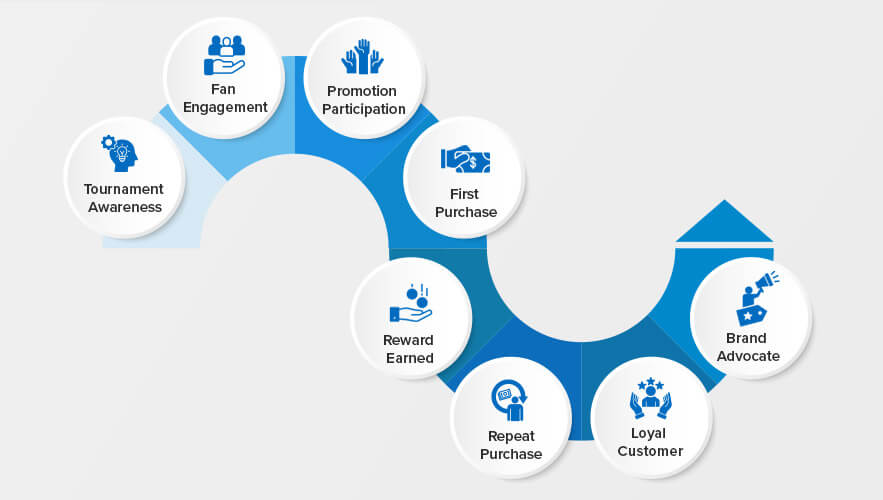
FIFA World Cup Loyalty Strategy Framework
Consumer Engagement Potential by Campaign Type
| Campaign Type | Engagement Potential |
|---|---|
| Discount Offers | Medium |
| Sweepstakes | Medium |
| Loyalty Rewards | High |
| Gamification | Very High |
| Predict-and-Win | Very High |
| Exclusive Experiences | Extremely High |
Common Mistakes Brands Should Avoid
In your customer engagement journey, you must avoid these potential discounts.
Focusing Only on Discounts
Discounts may drive short-term sales, but they rarely create long-term loyalty.
Ignoring Customer Data
Every interaction during the tournament should contribute to a deeper understanding of customer behaviour.
Creating Complex Experiences
Consumers want simplicity. Complicated promotions often reduce participation.
NOTE: The World Cup may last weeks. Customer relationships should last years. The brands that continue engaging customers after the tournament typically achieve the highest return on investment.
What Happens After the Final Whistle?
Many businesses disregard this as a massive opportunity. Top brands leverage the FIFA World Cup as an acquisition and engagement mechanism before moving consumers into their long-term loyalty programs.
Examples include:
- Personalised offers
- Member-exclusive experiences
- Ongoing reward campaigns
- Tier progression incentives
- Referral programmes
- Community-building initiatives
How Novus Loyalty Helps Brands Capitalise on Global Sporting Moments
Major sporting events create a surge in customer attention. The challenge is converting that attention into measurable business growth. This is where a modern loyalty platform becomes essential.
At Novus Loyalty, businesses can design and launch loyalty programmes that go beyond points and discounts.
Brands can create:
- Gamified customer journeys
- FIFA-themed promotions
- Predict-and-win campaigns
- Tiered reward programmes
- Digital vouchers and gift cards
- Coalition loyalty ecosystems
- Personalised customer engagement campaigns
Combining promotions, rewards and customer intelligence in one platform allows businesses to convert short-lived event-driven interaction into long term customer loyalty.
Regardless of their sector or geographical location, companies can build lasting customer relationships and deliver quantifiable return on investment (ROI) by utilising large-scale sports events as a catalyst for engagement within the organisation.
Wrapping Up
Advertisements seldom stick in people’s minds; the things that do stick are experiences.
To be honest, the 2026 FIFA World Cup is one of the largest opportunities of the decade for brands to create experiences that will last. Brands will succeed not by having the greatest discounts available, but rather by creating relevant interactions, rewarding consumers for participating, and developing long-term loyalty with customers. Football fever may only last a few weeks, but a customer’s loyalty can last for many years.
While the entire world will be watching the 2026 FIFA World Cup, the most intelligent brands will not only compete to draw attention to themselves; they will also compete in a much more significant way: to be a part of the daily life of their customers. And, in this highly competitive market, that is the greatest achievement available to brands today.
Explore Customer Loyalty
Design programs that increase customer lifetime value.