The Retail Merchant Churn Crisis: What’s Driving Customers Away in 2026?
- Editorial & Research Team
- |
- Published on June 5, 2026
On this page
Share Article


- More than 52% of consumers have stopped buying from a brand after a poor experience, revealing just how quickly customer relationships can break down.
- Retail churn rarely happens overnight. Small changes in customer behavior often signal larger retention challenges that many brands fail to recognize early.
- Today's shoppers expect far more than products and discounts, forcing retailers to rethink how they build long-term customer relationships.
- Many brands believe their customers are loyal, but changing consumer expectations are exposing hidden gaps in retention and engagement strategies.
- As competition intensifies across digital and physical channels, loyalty programs are emerging as a critical tool for sustainable retail growth.
More than 52% of consumers have stopped buying from a brand because of a bad product or service experience, while 29% have walked away due to poor customer experience online or in-store, according to PwC’s 2025 Customer Experience Survey.
That statistic should concern every retail merchant. For years, retailers focused heavily on customer acquisition. More advertising. More promotions. More channels. More traffic.
But in 2026, the challenge is no longer attracting customers. The challenge is keeping them. As e-commerce expands, competition intensifies, and customer expectations continue to rise, many retailers are discovering a costly reality: customers can leave faster than ever before.
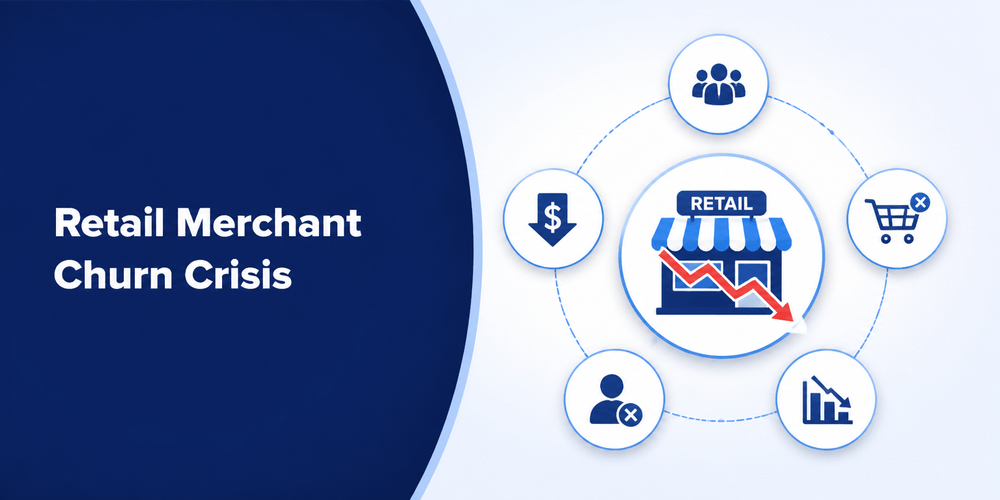
The result is retail merchant churn, a silent revenue leak that reduces repeat purchases, lowers transaction values, increases acquisition costs, and limits long-term profitability.
In this blog, we will understand why customers leave in the first place and how loyalty programs can transform one-time shoppers into long-term customers.
What Is Retail Merchant Churn?
Retail merchant churn occurs when customers stop purchasing from a retailer or significantly reduce their engagement over time. Unlike sudden sales declines, churn often happens gradually.
Customers may:
- Visit less frequently
- Purchase fewer products
- Spend less per transaction
- Stop responding to marketing campaigns
- Move to competing brands
By the time a retailer notices declining revenue, a significant portion of its customer base may already be disengaged. This is why churn is often called the hidden cost of retail growth.
Why Retail Customers Are Leaving Brands
Customer loyalty is becoming harder to earn and easier to lose.
The retail landscape has changed dramatically over the past few years. Customers today have more choices, more information, and more ways to shop than ever before. With just a few clicks, they can compare prices, read reviews, explore alternatives, and switch to a competing brand. As a result, loyalty is no longer driven by products or pricing alone.
Modern consumers expect brands to deliver convenience, personalization, and value throughout their entire shopping journey. They want seamless experiences across online and offline channels, relevant rewards, responsive service, and consistent engagement. When retailers fail to meet these expectations, customers often begin looking elsewhere, making retention one of the biggest challenges in today’s competitive retail environment.
Today’s consumers expect:
- Personalized experiences
- Seamless omnichannel interactions
- Relevant rewards and incentives
- Fast and convenient service
- Consistent engagement across touchpoints
- Greater value beyond discounts
When retailers fail to meet these expectations, customers have countless alternatives available within seconds.
The Five Biggest Drivers of Retail Churn
1. Poor Customer Experience
Customer experience remains one of the strongest predictors of retention. Whether the issue occurs online, in-store, or after purchase, negative experiences can quickly drive customers away.
2. Lack of Personalization
Generic offers no longer create engagement. Modern consumers expect brands to understand their preferences and shopping behaviors.
3. Increasing Price Competition
Customers can compare products, reviews, and prices instantly. Without a compelling reason to stay, many shoppers simply choose the lowest-cost alternative.
4. Inconsistent Omnichannel Experiences
Customers expect a connected experience across websites, mobile apps, marketplaces, and physical stores. Fragmented experiences often lead to frustration and abandonment.
5. No Reason to Return
Many retailers focus entirely on the first transaction. This creates the major problem. Customers need a reason to come back. Without ongoing value, repeat purchases become less likely.
The Loyalty Gap Retailers Cannot Ignore
Many retailers believe that repeat purchases automatically indicate customer loyalty. However, customer behavior often tells a different story. A customer may continue buying from a brand out of convenience, habit, or lack of alternatives, but that does not necessarily mean they feel connected to the brand.
The challenge is that loyalty can be fragile. Customers who appear engaged today may switch to a competitor tomorrow if they find better value, a more personalized experience, or stronger rewards elsewhere. This creates a loyalty gap where retailers assume customers are committed, while customers remain open to exploring other options.
The reality is simple: customer loyalty cannot be taken for granted. It must be continuously nurtured through meaningful engagement, personalized experiences, and rewards that give customers a compelling reason to stay.
Why Loyalty Programs Have Become a Business Necessity
Many businesses still view loyalty programs as discount engines. That approach is outdated.
In 2026, loyalty programs have evolved into retention, engagement, and customer intelligence platforms.
A modern loyalty program helps retailers:
- Increase repeat purchases
- Improve transaction values
- Encourage long-term engagement
- Gather customer insights
- Deliver personalized experiences
- Strengthen emotional connections
The Financial Impact of Customer Retention
The business case for loyalty is straightforward. Research from Bain & Company found that increasing customer retention by just 5% can increase profits by 25% to 95%.
This explains why retention has become a boardroom priority. Bain also reports that 53% of marketing budgets are now focused on existing customers rather than acquiring new ones. Leading retailers understand that retaining customers is often more profitable than constantly replacing them.
Customer Retention Impact
| Retention Improvement | Potential Profit Growth |
| 5% Increase | 25% – 95% Increase |
How Loyalty Programs Reduce Retail Merchant Churn
Personalized Rewards Increase Engagement
PwC found that 53% of consumers are willing to share personal information if it leads to a smoother and more personalized experience.
This creates opportunities for retailers to deliver:
- Personalized offers
- Product recommendations
- Milestone rewards
- Exclusive member benefits
Relevant rewards create stronger customer relationships.
Tiered Loyalty Encourages Long-Term Spending
Silver, Gold, and Platinum structures motivate customers to remain active and increase spending over time.
The more customers engage, the greater the rewards.
Gamification Creates Habitual Engagement
Challenges, badges, milestones, and bonus points add excitement to the shopping experience and encourage repeat visits.
Omnichannel Loyalty Creates Consistency
Customers should earn and redeem rewards seamlessly across:
- E-commerce websites
- Mobile applications
- Physical stores
- Social commerce channels
The Future of Retail Loyalty in 2026
Retail loyalty is entering a new phase. Interestingly, 46% of executives believe their current loyalty programs will become irrelevant within three years.
The reason is simple. Customers no longer want generic points programs.
They want:
- Personalized experiences
- Relevant rewards
- Recognition
- Convenience
- Emotional value
How Novus Loyalty Helps Retailers Reduce Churn
Reducing churn requires more than offering discounts.
Retailers need a loyalty strategy that aligns customer engagement, personalization, rewards, and retention into a single ecosystem.
At Novus Loyalty, businesses can build loyalty programs that encourage repeat purchases, increase customer lifetime value, improve transaction frequency, and create stronger brand relationships across digital and physical channels.
By combining customer engagement strategies with loyalty technology, retailers can transform loyalty from a marketing initiative into a measurable revenue driver.
Final Thoughts
Churn of retail merchants presents an often-overlooked growth opportunity for 2026. It is not the lack of choices that creates the challenge for customers; it is their lack of compelling reasons to remain with a particular brand. Successful retailers are changing their emphasis from acquiring customers in the immediate term to retaining customers for the long haul.
The data backs this movement up. Customers have very clear expectations around improved customer experience (CX), more personalized interactions during customer journeys, and enhancing customer engagement (CE). Brands that are capable of consistently delivering these four elements through well-structured loyalty programs will tend to have less churn, greater customer lifetime value (CLV), and enhance overall sustainable growth.
The question is no longer if loyalty programs work. It is now whether or not retailers can afford to operate without them.
Explore Retail Loyalty
Launch omnichannel loyalty programs to increase repeat visits.