Composable Loyalty Is Replacing Legacy Rewards Systems, And Enterprises Are Finally Escaping IT Debt
- Editorial & Research Team
- |
- Published on May 28, 2026
On this page
Share Article


- By 2026, over 60% of enterprise digital ecosystems are expected to become composable, and loyalty infrastructure is becoming a major part of this shift.
- Traditional loyalty systems are quietly increasing enterprise IT costs, slowing integrations, and limiting innovation across banking, retail, hospitality, travel, and fintech industries.
- API-first composable loyalty ecosystems are helping enterprises launch faster, scale smarter, and integrate seamlessly with modern digital platforms and customer engagement channels.
- AI-driven personalization, predictive engagement, and real-time rewards are becoming easier to deploy through modular loyalty infrastructures built for future-ready customer experiences.
- Enterprises adopting composable loyalty are not just upgrading rewards programs — they are reshaping customer engagement, operational agility, and long-term business scalability.
By the end of 2026, nearly 70% of enterprises are expected to adopt composable digital experience technologies in production, while over 60% of enterprise technology stacks are projected to become MACH-based (Microservices-based, API-first, Cloud-native, and Headless). The actual reason is that legacy systems are becoming too expensive, too rigid, and too slow for modern customer engagement.
The loyalty industry is now entering the same transformation. Across banking, retail, ecommerce, hospitality, airlines, telecom, healthcare, and fintech, enterprises are replacing traditional loyalty infrastructure with modular, API-driven ecosystems that are faster to scale, easier to integrate, and significantly cheaper to maintain. This shift is called composable loyalty. In 2026, it is becoming one of the biggest enterprise technology trends globally.
What Is Composable Loyalty?
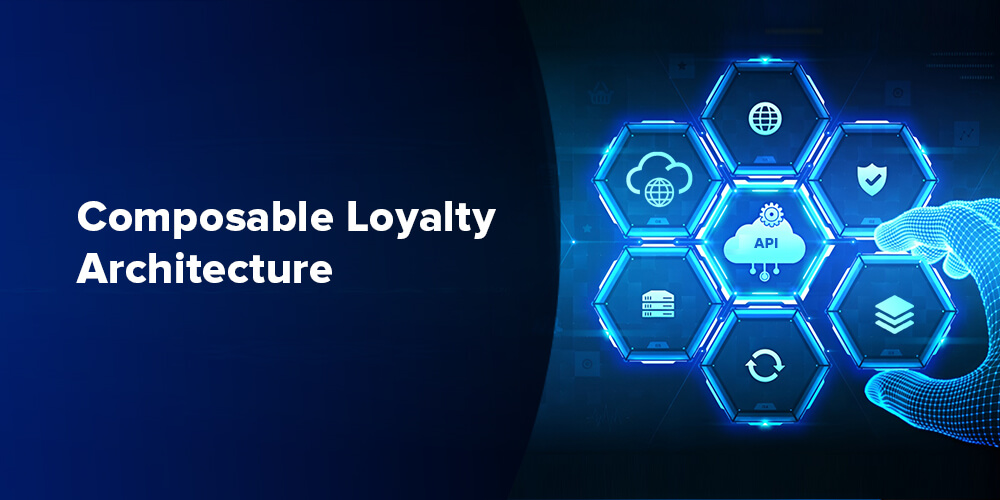
Composable loyalty is a modular approach where businesses build loyalty ecosystems using independent but connected components instead of relying on one large, rigid platform.
A Composable Loyalty Program allows enterprises to plug in or replace capabilities like:
- Rewards engines
- Wallets
- Voucher systems
- Gamification
- AI personalization
- CRM integrations
- Referral systems
- Merchant offers
- Analytics dashboards
- Tier management
- Travel and lifestyle redemptions
All these modules communicate through APIs. This is very different from a Monolithic Loyalty Program, where every function is tightly connected inside one system, making upgrades, integrations, and innovation painfully slow.
You can think of it like replacing a single giant machine with smaller smart building blocks. If one module needs an upgrade, businesses do not have to rebuild the entire ecosystem.
Why Enterprises Are Moving Away From Monolithic Loyalty Programs
Customer expectations changed faster than enterprise systems could evolve.
Today’s consumers expect:
- Real-time rewards
- Hyper-personalized offers
- Omnichannel experiences
- UPI and wallet integrations
- Instant redemptions
- Lifestyle partnerships
- AI-powered recommendations
- Frictionless mobile engagement
Legacy loyalty systems struggle to support these experiences because most were built years before API-first infrastructure became mainstream.
The result?
| Legacy Loyalty | Impact on Enterprises |
|---|---|
| Slow integrations | Delayed launches |
| Heavy customization costs | Rising IT debts |
| Vendor lock-in | Reduced flexibility |
| Complex infrastructure | Higher operational expenses |
| Siloed customer data | Weak personalization |
| Long deployment cycles | Slower innovation |
The Real Reason Enterprises Want Composable Loyalty: Lower IT Costs
One of the biggest hidden problems in enterprise loyalty infrastructure is technical debt.
Many companies spend more money maintaining outdated systems than improving customer engagement.
Composable loyalty reduces this burden through:
API-First Architecture
An API-first loyalty platform connects easily with:
- Banking systems
- POS machines
- E-commerce platforms
- CRMs
- ERP systems
- Payment gateways
- Mobile apps
- QR ecosystems
- Airline booking engines
- Hospitality PMS systems
This dramatically reduces redevelopment costs and integration timelines.
According to MACH Alliance-backed research, enterprises with mature composable infrastructure report faster deployments and significantly higher AI readiness compared to businesses using legacy systems.
Faster Deployment and Scalability
Composable ecosystems allow enterprises to scale modules independently.
For example:
- Retail brands can scale rewards during festive sales.
- Banks can handle transaction surges during cashback campaigns.
- Airlines can expand redemption systems during peak travel periods.
Without disrupting the entire platform.
Research published in 2026 also shows composable implementations delivering up to 80% faster deployment cycles.
Why AI and Composable Loyalty Are Deeply Connected
AI is rapidly changing loyalty programs. But AI cannot work efficiently on outdated infrastructure.
Composable architecture solves this because APIs allow AI systems to access customer behavior, transactions, engagement history, and rewards data in real time.
This enables:
- Predictive rewards
- Smart recommendations
- Churn prediction
- Dynamic campaigns
- Behavioral segmentation
- AI-powered customer journeys
A 2026 MACH Alliance report found that organizations with mature composable infrastructure are 6x more likely to achieve clear AI ROI than companies still using traditional architectures.
The same report also revealed:
- 98% of composable-mature enterprises can support AI at scale
- 94% say composable infrastructure speeds up AI deployment
Industries Rapidly Adopting Composable Loyalty
Composable loyalty is no longer limited to e-commerce.
Banking & Fintech
Banks are building modular ecosystems around cards, UPI, merchant offers, savings products, and lifestyle rewards.
Retail & Ecommerce
Retailers are integrating loyalty with AI recommendations, commerce engines, and digital payments.
Hospitality & Airlines
Travel brands are connecting loyalty with booking systems, wallet rewards, dynamic pricing, and partner ecosystems.
Healthcare
Hospitals are using loyalty for patient engagement, wellness rewards, and digital health ecosystems.
Fuel & Mobility
Petrol stations and mobility apps are deploying QR-led rewards and subscription-based engagement models.
India is also becoming a major growth market because businesses are rapidly modernizing digital infrastructure around UPI, wallets, embedded finance, and omnichannel engagement.
The Challenges Enterprises Must Still Consider
Composable loyalty is powerful, but it is not “plug-and-play.”
Businesses still need:
- Strong API governance
- Reliable cloud infrastructure
- Integration expertise
- Vendor coordination
- Data security frameworks
- Skilled implementation partners
Industry experts also warn that enterprises adopting composable ecosystems without proper planning may increase operational complexity.
How Novus Loyalty Fits Into This Shift
As enterprises move toward modular ecosystems, the role of loyalty partners is changing rapidly. Businesses now need scalable, API-driven loyalty ecosystems instead of rigid rewards platforms.
Novus Loyalty focuses on helping enterprises build connected loyalty infrastructures through:
- API-led integrations
- Wallet-enabled rewards
- Merchant-funded ecosystems
- Omnichannel engagement
- AI-ready loyalty frameworks
- Partner-based redemption ecosystems
The goal is to reduce infrastructure dependency while helping enterprises innovate faster.
Final Thoughts
Composable loyalty is not merely a new trend in loyalty programs; it is an answer to a much larger problem within the enterprise: increased IT debt, slow innovation rates, disconnected systems, and the increasing expectations of customers.
The loyalty platforms of 2026 will not just be managed as separate rewards engines; they will have converted into connected, holistic ecosystems of customer engagement that use APIs, AI, cloud-based infrastructure, and modular architectures.
Enterprises that adopt early will not only reduce the costs of their technology but will also be able to develop faster, smarter, more scalable relationships with their customers. This is why composable loyalty is becoming the future of enterprise engagement.
Explore Enterprise Loyalty
Manage large-scale loyalty programs with automation and insights.