How to Calculate Loyalty Program ROI: Step-by-Step Guide
- Editorial & Research Team
- |
- Published on May 12, 2026
On this page
Share Article


- Most loyalty programs fail because brands track revenue instead of the right loyalty metrics that actually reveal incremental growth and long-term profitability.
- Hidden costs like reward liability, labor, and redemption behavior can quietly reduce margins if they are not calculated correctly from the start.
- Small improvements in retention, purchase frequency, and customer lifetime value can dramatically change the financial performance of a loyalty program.
- Different loyalty models generate ROI differently, which means points, cashback, referral, and subscription programs should never be measured the same way.
- Real-world loyalty leaders like Starbucks, Sephora, and Amazon Prime reveal why behavior-driven engagement consistently outperforms discount-driven retention.
Loyal customers are worth significantly more than one-time buyers. According to research published by Harvard Business Review, increasing customer retention rates by just 5% can increase profits by 25% to 95%.
Yet most businesses still launch loyalty programs without knowing whether the investment is actually profitable.
That is where loyalty program ROI becomes critical.
If you do not measure the true financial impact of your loyalty program, it becomes impossible to know whether your rewards are driving incremental growth or simply discounting purchases customers would have made anyway.
In this guide, you will learn how to calculate loyalty program ROI step by step, including formulas, benchmarks, hidden costs, real-world examples, and the metrics that actually matter. You will also discover how tools like the Novus Loyalty Value Calculator help businesses forecast loyalty performance more accurately before launch.
What Is Loyalty Program ROI?
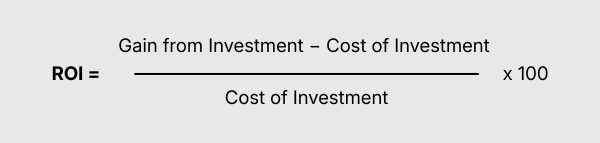
Loyalty program ROI measures how much profit your business generates compared to the total cost of running the program.
In simple terms, it answers one question: Is this loyalty program making more money than it costs?
The standard formula is:
Most brands calculate this incorrectly.
The biggest mistake is counting all revenue from loyalty members as loyalty-generated revenue. That creates inflated ROI numbers because many customers would have purchased from you anyway, even without rewards.
What actually matters is incremental revenue. You need to measure:
- Did members spend more than non-members?
- Did they buy more frequently?
- Did they stay longer?
- Did the program reduce churn?
- Did the increase in profit exceed the total cost of rewards?
This is why mature loyalty programs use a control group methodology. A control group compares loyalty members against similar non-members to isolate the program’s actual impact. Without that comparison, your ROI calculation is likely overstated.
Another issue is incomplete cost tracking. Most businesses only count software fees and reward costs while ignoring labor, support, marketing, creative production, and reward liability. That leads to unrealistic expectations and poor financial planning. The good news is that calculating loyalty ROI properly is not complicated once you know the right framework.
The 5 Key Metrics You Must Track Before Calculating ROI
Before you calculate loyalty program ROI, you need baseline metrics. Without them, you cannot measure whether the program improved customer behavior. These are the five most important loyalty metrics every business should track.
Customer Lifetime Value (CLV)
Customer Lifetime Value measures the total revenue a customer generates during their relationship with your business.
The formula is:

Example:
- Average Order Value = $100
- Purchase Frequency = 4 orders/year
- Customer Lifespan = 3 years
CLV = $1,200
Loyalty programs exist primarily to increase CLV by improving retention and purchase frequency. According to research from Bain & Company, even small increases in customer retention can significantly increase profitability.
Repeat Purchase Rate
Repeat Purchase Rate measures how many customers come back and buy again.
Formula:
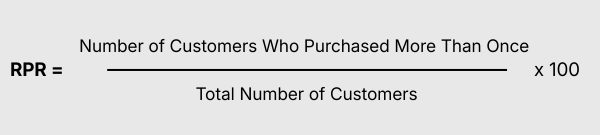
For most e-commerce brands, average repeat purchase rates range between 20% and 30%. Strong loyalty programs improve repeat purchases by encouraging:
- Faster second purchases
- Habit formation
- More frequent orders
- Tier progression
- Reward redemption engagement
If your repeat purchase rate is already low before launch, your loyalty program may struggle to generate meaningful ROI.
Average Order Value (AOV)
Average Order Value tracks how much customers spend per transaction.
Formula:

Loyalty programs often increase AOV through:
- Spend thresholds
- Bonus point campaigns
- Product bundles
- Tier upgrades
- Exclusive rewards
Retail studies show loyalty members often spend 10% to 25% more per transaction than non-members.
Redemption Rate
Redemption Rate measures how many rewards customers actually redeem.
Formula:

Healthy redemption rates typically look like this:
- Retail: 15% – 25%
- Travel & hospitality: 30% – 40%
- Subscription businesses: 20% – 35%
If redemption is too low, customers may not see value in the program. If redemption is too high, reward costs can quickly damage margins. The goal is balanced engagement.
Customer Churn Rate
Customer churn measures how many customers stop buying over time.
Formula:
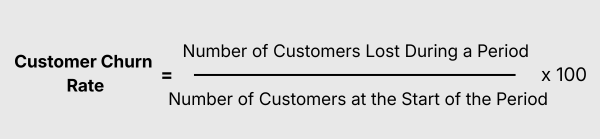
Reducing churn is often where loyalty programs generate the highest long-term financial impact. Even small retention improvements compound significantly over time.
Full Loyalty Program Cost Breakdown
Most brands underestimate loyalty program costs. That is one reason many ROI calculations fail. To measure profitability accurately, you must include both direct and indirect costs.
Direct Costs
These are the obvious expenses tied directly to the loyalty program. Common direct costs include:
- Loyalty platform/ software fees
- Reward redemption costs
- Cashback payouts
- Discounts
- Gift cards or free products
- Launch campaigns
- Email and SMS communication
- Creative asset production
- Integration and onboarding costs
Reward costs are usually the largest variable expense. For example, if your loyalty structure offers 5% cashback and members spend $500,000 annually, reward liability alone could reach $25,000 before redemptions are processed.
Indirect / Hidden Costs
These are the costs most businesses forget to track. But they matter. Hidden costs often include:
- Employee time spent managing campaigns
- Customer support increases
- Technical maintenance
- Analytics and reporting
- Fraud monitoring
- Agency costs
- Loyalty strategy consulting
- Staff training
- App or wallet pass management
Labor costs should be calculated as a percentage of salary allocation.
Example:
If a marketing manager earning $60,000 annually spends 20% of their time managing loyalty campaigns, the loyalty labor cost equals $12,000 per year.
Reward Liability Explained
Reward liability refers to the value of unredeemed rewards customers have earned. This matters because earned rewards become a financial obligation. Many brands ignore this until redemption spikes suddenly increase costs.
A simplified reward liability formula looks like this:
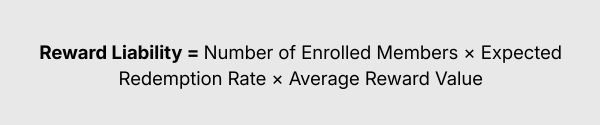
Example:
- 5,000 enrolled members
- Average reward value per member = $8
- Total reward liability = $40,000
How to Calculate Loyalty Program ROI
Steps:
Now, let us calculate loyalty ROI using a practical example.
Example Business Scenario
- E-commerce brand
- 20,000 customers
- Average Order Value = $100
- Gross margin = 40%
- Loyalty enrollment target = 20%
- Expected members = 4,000
Step 1: Forecast Enrollment & Engagement
First, estimate:
- Expected enrollment
- Purchase frequency increases
- Spend uplift
- Redemption behavior
Example:
- 20,000 customers
- 20% enrollment rate
- 4,000 loyalty members
Before loyalty:
- Purchase frequency = 3 orders/year
After loyalty:
- Purchase frequency = 4 orders/year
That means the loyalty program is expected to generate one additional annual order per member.
Step 2: Calculate Total Reward Costs
Assume your program offers 5% back in points.
Member annual spend:
- 4 orders × $100 AOV = $400 annual spend/member
Total member spend:
- 4,000 members × $400 = $1,600,000
Reward cost formula:

- $1,600,000 × 5%
- Total reward cost = $80,000
If the redemption rate is 70%, the actual redeemed cost initially equals $56,000.
Step 3: Add Up All Program Costs
| Cost Category | Annual Cost |
|---|---|
| Loyalty Platform | $18,000 |
| Rewards Redeemed | $56,000 |
| Marketing Campaigns | $12,000 |
| Labor Costs | $15,000 |
| Technical Maintenance | $5,000 |
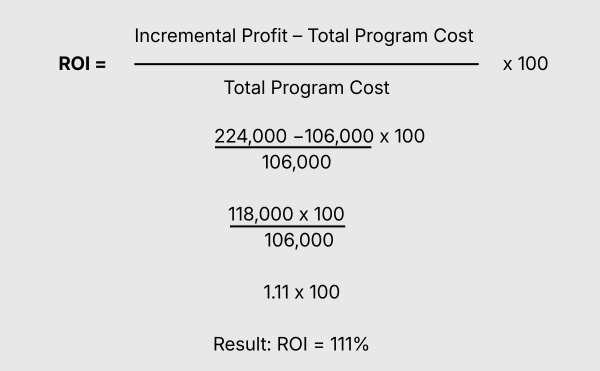
| Total Program Cost | $106,000 |
Step 4: Measure Member vs Non-Member Behaviour
Instead of counting total member revenue, compare member behavior against non-members.
| Metric | Member | Non-Member |
|---|---|---|
| Annual Orders | 4 | 3 |
| Average Order Value | $110 | $100 |
| Annual Spend | $440 | $300 |
Incremental revenue per member: $440 − $300 = $140
Incremental revenue from 4,000 members: $140 × 4,000 = $560,000
Step 5: Calculate Incremental Profit
Revenue alone is not enough. You need incremental profit. Using a 40% gross margin:

- $560,000 × 40%
- Incremental profit = $224,000
Step 6: Apply the ROI Formula
Now calculate ROI.
Step 7: Calculate Payback Period
Most loyalty ROI guides ignore the payback period. But it is one of the most important business metrics. The formula is:

Example:
- Annual incremental profit = $224,000
- Monthly incremental profit = $18,667
- Total program cost = $106,000
Payback period:
- $106,000 ÷ $18,667 = 5.6 months
That means the loyalty program recovers its investment in less than six months. This is a critical metric for finance and leadership teams evaluating loyalty investments.
ROI Formulas for Different Loyalty Program Types
Not all loyalty programs work the same way.
Different models require different ROI calculations.
Points-Based Programs
Points programs reward customers for purchases or actions.
Formula:

Best for:
- Retail
- E-commerce
- Restaurants
- Grocery
Tiered Loyalty Programs
Tiered programs increase spending incentives by unlocking higher-value benefits.
Formula:
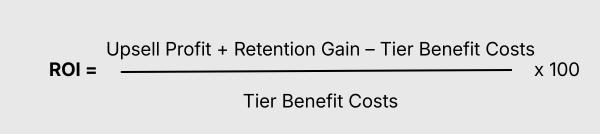
These programs work especially well when customers increase their spending to maintain their status.
Cashback Programs
Cashback programs offer direct monetary rewards.
Formula:

These programs are easy for customers to understand but require careful margin management.
Referral Programs
Referral programs reduce customer acquisition costs by turning customers into advocates.
Formula:

This model works best when referral conversion rates outperform paid acquisition channels.
Paid / Subscription Loyalty Programs
Subscription loyalty combines membership fees with increased customer spending.
Formula:
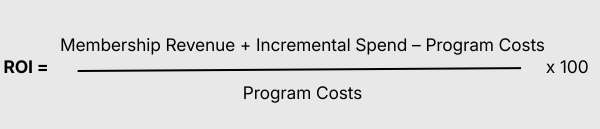
Programs like Amazon Prime succeed because they create both recurring revenue and stronger purchase frequency.
Real-World Examples: What Good Loyalty ROI Looks Like
The best way to understand loyalty ROI is to study brands already doing it successfully.
Starbucks Rewards
According to publicly available reports from Starbucks Investor Relations, Starbucks Rewards members account for a major share of Starbucks’ US sales..
The program succeeds because it combines:
- Mobile payments
- Personalized offers
- Stored value wallets
- Frequency rewards
- Habit-forming engagement
Starbucks has also reported that Rewards members visit stores significantly more frequently than non-members.
Sephora Beauty Insider
According to industry publications, including Forbes, Sephora’s Beauty Insider program has tens of millions of members globally.
Its tiered structure drives:
- Higher spending thresholds
- VIP exclusivity
- Emotional engagement
- Higher average order value
The more customers progress through tiers, the more likely they are to increase spend.
Key takeaway: Tier progression creates powerful psychological motivation that increases both retention and revenue.
Amazon Prime
According to reporting from Business Insider and other public sources, Amazon Prime members spend significantly more annually than non-members.
Prime succeeds because the subscription itself changes purchasing behavior.
Once customers subscribe, they become more likely to:
- Consolidate purchases on Amazon
- Buy more frequently
- Use additional ecosystem services
6 Mistakes That Destroy Loyalty Program ROI
Even strong loyalty concepts can fail if the economics are weak. These are the biggest mistakes businesses make.
1. Counting Total Member Revenue Instead of Incremental Revenue
This is the biggest ROI mistake. Only count revenue generated because of the loyalty program. Otherwise, ROI becomes artificially inflated.
2. Underestimating Reward Liability
High redemption periods can create unexpected financial pressure. Track liabilities and forecast redemption trends regularly.
3. Not Using a Control Group
Without comparing members against non-members, you cannot isolate the loyalty program’s actual impact. Even simple A/B testing improves measurement accuracy dramatically.
4. Rewarding Behaviour Customers Would Have Done Anyway
If customers earn rewards on every purchase regardless of behavior, you may simply subsidize existing revenue.
Focus rewards on:
- Repeat purchases
- Referrals
- Higher spend thresholds
- Cross-category engagement
5. Ignoring Program Cannibalization
Discount-heavy programs often reduce margins unnecessarily. Some customers would have purchased at full price even without rewards. This is especially risky with aggressive cashback structures.
6. Launching Without Tracking Infrastructure
If you do not baseline metrics before launch, measuring ROI later becomes extremely difficult.
Track the points given below before launching your program.
- CLV
- AOV
- Churn
- Repeat purchases
- Redemption rates
Signs Your Business Is NOT Ready for a Loyalty Program Yet
Not every business should launch loyalty immediately. In some cases, improving retention fundamentals first creates far better ROI.
Your Gross Margin Is Below 20%
If margins are already thin, reward costs can quickly eliminate profitability. You may need pricing optimization before loyalty.
Your Category Has Weak Repeat Purchase Behaviour
Loyalty works best when customers buy repeatedly. One-time purchase categories may struggle to justify ongoing reward costs.
You Do Not Have CRM or Email Infrastructure
A loyalty program without communication rarely succeeds. You need the ability to:
- Send campaigns
- Trigger reminders
- Personalize offers
- Promote rewards
You Have No Baseline Customer Data
Measuring ROI becomes almost impossible if you do not know your:
- CLV
- Purchase frequency
- Churn rate
- Average order value
You Do Not Have a Budget for Proper Execution
Poorly executed loyalty programs damage trust. A rushed program with weak rewards or broken redemption experiences can hurt retention instead of improving it. If any of the above apply to your business, fix these foundations first. Then revisit loyalty.
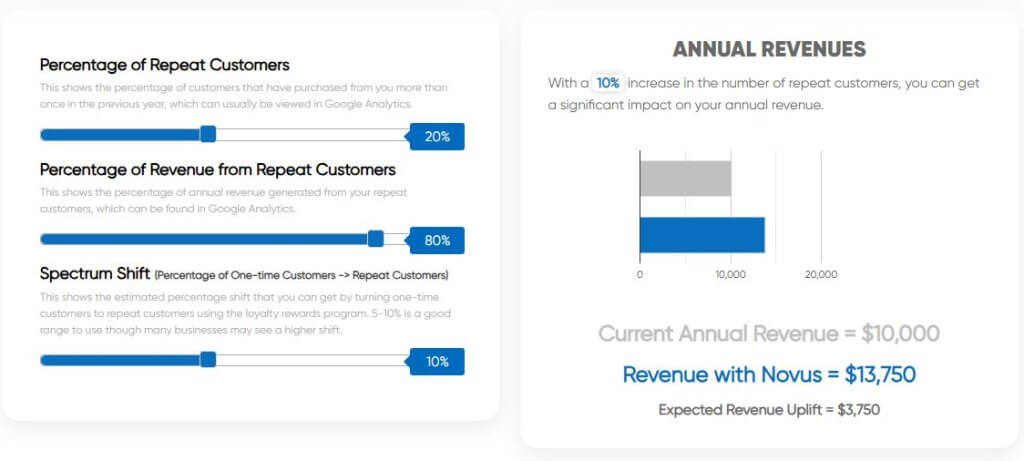
Calculate Your Loyalty Program ROI with the Free Novus Value Calculator
Calculating loyalty ROI manually can quickly become complicated. That is why many businesses now use automated ROI modeling tools before launching a program. One of the reliable and accurate calculators is the Novus Loyalty Value Calculator.
The Novus Loyalty Value Calculator helps businesses estimate:
- Projected loyalty ROI
- Incremental revenue impact
- Retention improvements
- Customer lifetime value uplift
- Payback period timelines
Unlike static spreadsheets, the calculator simplifies forecasting using practical business inputs, making it easier for marketing and finance teams to align on expected outcomes before implementation.
Businesses can also use downloadable templates to customize calculations using their own assumptions and loyalty models.
Final Thoughts
A loyalty program should never function as a simple discount engine. The strongest programs increase customer lifetime value, improve retention, reduce churn, and create measurable long-term profitability. But none of that matters if you cannot measure the impact accurately.
By tracking the right metrics, isolating incremental behavior, forecasting reward liability correctly, and using proper ROI calculations, businesses can make far smarter loyalty investment decisions. Most importantly, they can avoid launching a program that looks engaging on the surface but quietly destroys margins underneath.
If you are evaluating loyalty for your business, start with the numbers first. That is where sustainable loyalty growth begins.
Explore Enterprise Loyalty
Manage large-scale loyalty programs with automation and insights.