E-commerce Loyalty Program: Proven Ideas, Trends & Strategies for 2026
- Editorial & Research Team
- |
- Published on March 11, 2026
On this page
Share Article


- Rising acquisition costs and low retention rates are forcing e-commerce brands to rethink growth strategies, making loyalty programs a powerful retention and revenue matrix.
- Modern e-commerce loyalty programs go far beyond points and coupons, focusing on long-term engagement, emotional brand connections, and experiences that keep customers returning.
- From engagement rewards to referrals and social participation, brands are rewarding multiple customer actions to strengthen relationships and increase long-term customer lifetime value.
- Gamification, personalization, community participation, and experiential rewards are transforming loyalty programs into immersive brand ecosystems rather than simple transactional incentives.
- Advanced loyalty platforms now enable automation, personalization, and scalable reward ecosystems, helping brands turn scattered customer interactions into strategic retention opportunities.
Global e-commerce continues to grow rapidly. The market is expected to reach around $6.8 trillion by 2026, expanding at a CAGR of roughly 9–10% between 2023 and 2027, with more than 2.7 billion people shopping online worldwide. However, this growth has also intensified competition. Customer acquisition costs are rising, while average e-commerce retention rates still remain around 25–30%, pushing brands to focus more on retention and long-term customer value.
Loyalty programs have emerged as a powerful solution to address this challenge. Well-designed programs can generate up to 5× return on investment, while repeat customers typically spend more than first-time buyers. Modern ecommerce loyalty programs now focus on personalization, gamification, and engagement-based rewards to build stronger relationships and encourage repeat purchases. This blog explores the key strategies and innovative ideas shaping e-commerce loyalty programs in 2026.
The Rapid Growth of E-commerce and the Loyalty Opportunity
Over the last decade, e-commerce has transformed global retail. Today, over 20% of global retail purchases happen online, and that number continues to grow as consumers prioritize convenience, fast delivery, and personalized shopping experiences.
However, the rapid shift to online shopping has also intensified competition. Thousands of new online stores launch every year, giving customers endless options and making it incredibly easy to compare prices or switch between brands in seconds. Because of this, customer loyalty has become harder to maintain. Instead of focusing only on acquiring new customers, many businesses are investing in retention strategies that increase customer lifetime value.
Loyalty programs play a key role in this shift by encouraging repeat purchases, strengthening brand relationships, and giving customers compelling reasons to return.
What Is an E-commerce Loyalty Program?
An Ecommerce loyalty program is a structured strategy that rewards users who engage with your business or brand. Engagement can be defined as activities like buying, referring, reviewing products, and participating in social media interactions.
Loyalty programs in e-commerce serve the simple purpose of getting customers to return for additional purchases.
Brands utilize loyalty programs to build lasting relationships with their customers instead of relying solely on one off purchases to gain loyalty from the consumer. Loyalty programs allow companies to provide their customers with numerous reward options, special member only perks and personalized offers which all contribute to giving customers more value as well as deepening the connection between the customer and the company.
Modern ecommerce reward programs typically provide rewards for many different behaviours customers exhibit, including:
- Making purchases
- Referring friends
- Writing product reviews
- Sharing products on social media
- Celebrating birthdays or anniversaries
- Engaging with the brand’s community
With the help of advanced e-commerce loyalty software, businesses can automate these rewards and manage customer engagement at scale.
Why Loyalty Programs Matter for E-commerce Brands
Loyalty programs offer several clear advantages for online businesses.
1. Higher Customer Retention
Customers who participate in loyalty programs are far more likely to return and make repeat purchases.
2. Increased Customer Lifetime Value (CLV)
Repeat customers usually spend more over time, increasing their overall lifetime value.
3. Lower Marketing Costs
Retaining existing customers costs significantly less than acquiring new ones.
4. Stronger Brand Relationships
Rewarding customers builds trust and emotional connections with the brand.
5. Word-of-Mouth Growth
Satisfied customers often recommend brands to friends and family.
Types of E-commerce Loyalty Programs
Every loyalty program operates differently for different industries. Depending on their business model and consumer behaviour, several brands and sectors select different structures.
Below are some of the most popular e-commerce loyalty programs.
Points-Based Loyalty Programs
Points programs are the most familiar type of loyalty system.
Customers earn points whenever they make a purchase or interact with the brand. These points can later be redeemed for discounts, products, or other rewards.
This model works well for businesses that want to encourage frequent purchases.
Tiered Loyalty Programs
Tiered programs divide customers into different levels based on their spending or engagement.
For example:

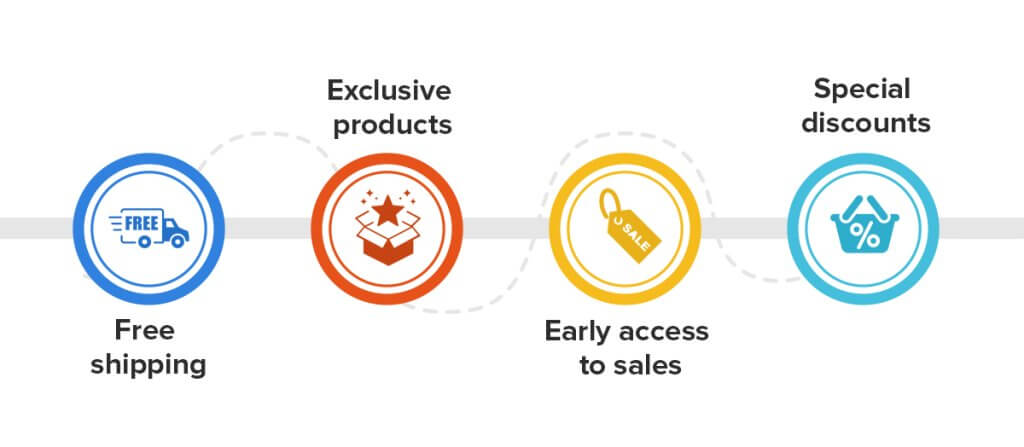
Additional privileges and rewards, including early product access, special discounts, or first-rate customer service, are unlocked at each level.
Customers are encouraged to spend more through tiered programs in order to advance in status.
Loyalty Programs with Cashback
Customers who participate in cashback schemes receive monetary value or shop credit for their purchases.
For example, a consumer may receive a 5% refund on each purchase, which can be applied to subsequent purchases.
This strategy works particularly well in markets where consumers are very price-conscious.
Programs for Referral Loyalty
Customers who refer friends to a brand are rewarded by referral programs.
A typical structure might offer:
- A discount or reward for the existing customer
- A welcome incentive for the referred friend
This turns loyal customers into brand promoters.
Paid Loyalty Programs
Some brands offer premium loyalty memberships that require a subscription fee.
Best E-commerce Loyalty Program Ideas for 2026
E-commerce loyalty programs continue to evolve. The most successful brands are introducing creative ideas that go beyond traditional rewards.
Here are some of the most effective strategies businesses are using.
Reward Customer Engagement
Instead of rewarding only purchases, brands are rewarding engagement activities like reviews, social shares, and feedback.
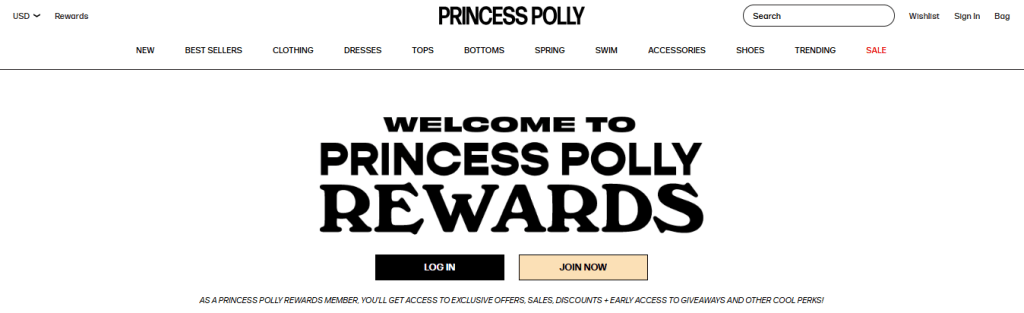
A strong example is Princess Polly, which runs a loyalty program that rewards customers for engagement activities like leaving product reviews, following the brand on social media, and making purchases. Members earn points for these actions and can redeem them for discounts and exclusive perks.
Why it works
- Encourages customers to interact with the brand beyond purchases
- Generates authentic reviews and social engagement
- Strengthens long-term customer relationships
Gamification
Adding game-like elements such as points, challenges, reward spins, or milestone achievements can make loyalty programs more engaging.
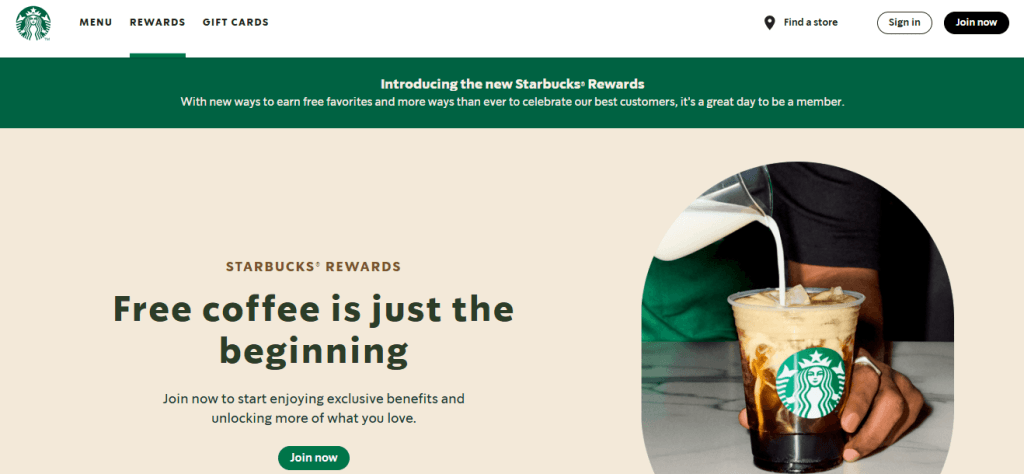
A popular example is Starbucks, whose loyalty program uses stars, challenges, and milestone rewards. Customers earn stars for purchases and unlock rewards like free drinks, exclusive offers, or bonus challenges through the mobile app.
Why it works
- Makes loyalty participation exciting
- Encourages frequent purchases
- Creates a sense of achievement and progression
Personalized Rewards
Modern programs use customer data to deliver personalized offers based on shopping behaviour and preferences.
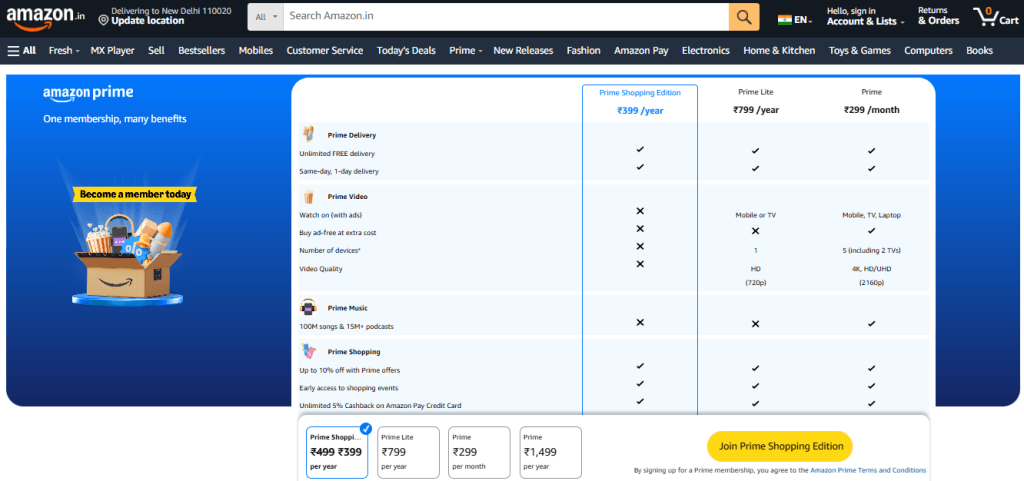
The prime example is Amazon. They provide highly personalized offers and product recommendations through their membership ecosystem. Customers receive tailored deals, recommendations, and early access to products based on their shopping behaviour.
Why it works
- Improves the relevance of rewards
- Increases conversion rates
- Enhances customer experience
Experiential Rewards
Customers increasingly value experiences such as exclusive events, early product launches, or VIP perks.
One of the best examples of experiential rewards is Sephora through its Beauty Insider loyalty program. Members gain access to exclusive product launches, beauty events, personalized consultations, and VIP experiences depending on their membership tier.

Why it works
- Creates emotional connections with the brand
- Builds exclusivity and prestige
- Encourages higher spending to unlock tiers
Community Building
Some brands encourage customers to join communities, participate in discussions, or contribute content in exchange for rewards.
A strong example is LEGO through the LEGO Ideas platform. Customers submit product ideas, vote on designs, and engage with other fans. Contributors can receive recognition, rewards, and even royalties if their ideas become official products.

Why it works
- Builds a strong brand community
- Encourages user participation and creativity
- Turns customers into brand advocates
The Future of E-commerce Loyalty: Generative AI & Social Commerce
Generative AI & Hyper-Personalization
Generative AI is transforming how loyalty programs interact with customers. Instead of offering generic discounts, brands can now create highly personalized rewards and offers based on customer behaviour, purchase history, and preferences.
AI-powered loyalty programs can automatically generate:
- Personalized discounts and product recommendations
- Targeted bonus point campaigns
- Customized reward experiences for different customer segments
- Dynamic offers based on browsing and shopping behaviour
This level of hyper-personalization makes loyalty programs more relevant, increasing customer engagement and repeat purchases.
Social Commerce & Community-Driven Loyalty
Social media platforms have become major drivers of product discovery and online shopping. As a result, many brands are integrating loyalty programs with social commerce.
Customers can earn rewards for social activities such as:
- Sharing products on social media
- Posting reviews or user-generated content
- Referring friends through social platforms
- Participating in brand campaigns or community challenges
By rewarding social engagement, brands turn customers into advocates while increasing brand visibility and trust.
Top E-commerce Loyalty Platforms in 2026
A comparison of some of the top e-commerce loyalty program providers in 2026 to assist businesses in understanding their options. Depending on the needs of the company, each platform has distinct advantages.
Novus Loyalty
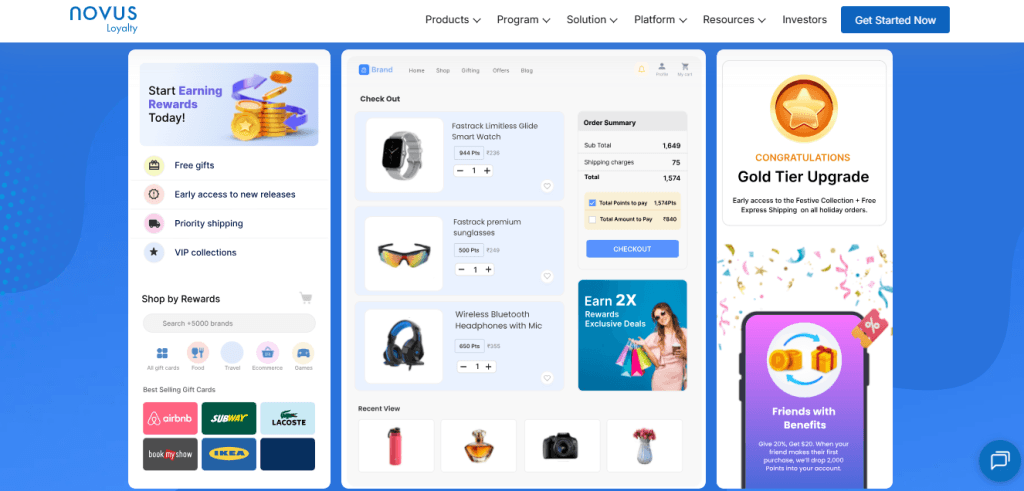
The goal of Novus Loyalty is to create highly adaptable loyalty ecosystems that assist the banking, fintech, retail, and e-commerce sectors. Businesses may create customized e-commerce rewards programs, connect rewards across several partners, and provide individualized loyalty experiences at scale with the help of this platform. Novus Loyalty integrates Shopify, WooCommerce, and Wix.
Key Features
Customizable loyalty programs, omnichannel reward systems, advanced analytics, digital wallet integrations, partner reward ecosystems
Best For
Enterprises, banks, e-commerce brands, retail ecosystems
Open Loyalty
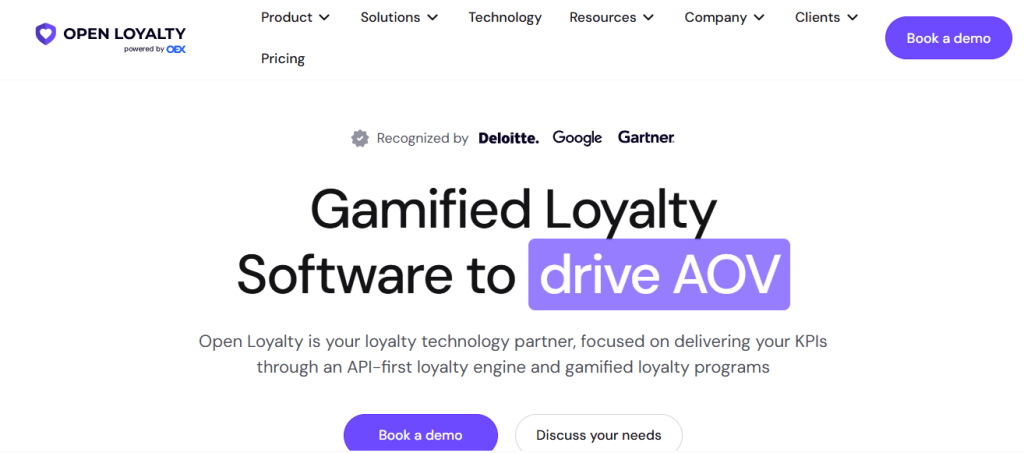
Open Loyalty provides a flexible API-driven loyalty engine that allows companies to build loyalty programs directly into their digital products. It is widely used by businesses that need high customization and full control over loyalty program logic.
Key Features
API-first architecture, gamification features, advanced segmentation, customizable loyalty logic, and real-time customer engagement
Best For
Enterprises that want an API-first loyalty infrastructure
Smile.io

Many companies opt for Smile.io because it provides a simple and quick way to develop loyalty programs for ecommerce fields. Additionally, Smile.io works very well for businesses looking for pre-existing functionality as opposed to needing to be modified extensively.
Key Features
Points programs, referral rewards, VIP tiers, and integrations with major e-commerce platforms
Best For
Small and mid-sized e-commerce businesses
LoyaltyLion
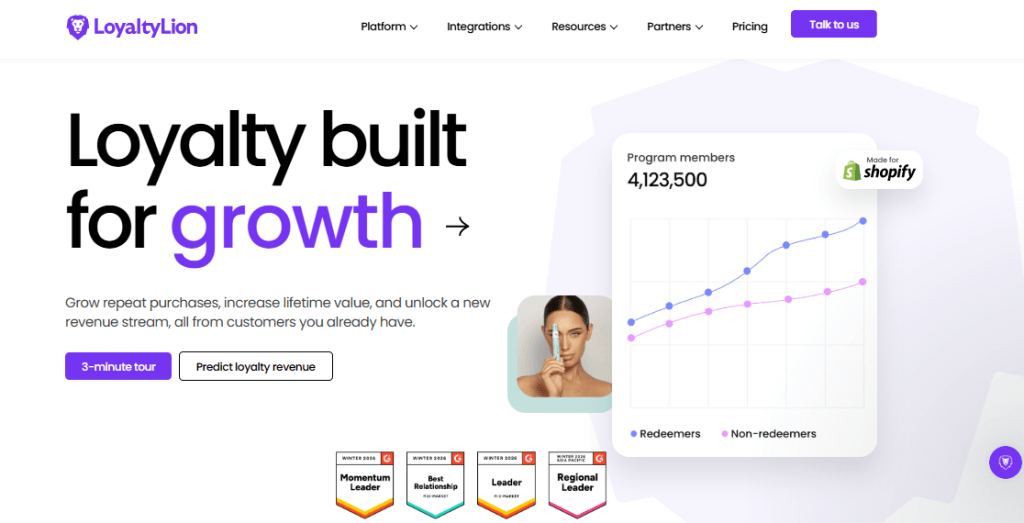
LoyaltyLion assists companies in creating loyalty programs that promote customer advocacy, social media sharing, and reviews, in addition to sales.
Key Features
Points and tier programs, referral incentives, behaviour-based rewards, data insights
Best For
E-commerce brands focused on retention and customer engagement
Wrapping Up
Every year, e-commerce becomes a more saturated market than the previous year. With so many different choices available to consumers, it is easier to find new customers for your website than to continue selling to them.
There are many successful e-commerce loyalty programs currently in place that are critical to the modern growth strategy because they will increase the likelihood of repeat purchasing behaviour by customers, create long-term customer relationships, and establish loyalty to the brand.
With a sound strategy and an innovative e-commerce loyalty program designed to enhance their shopping experience, infrequent customers can be transformed into frequent, long-term customers.
Having loyal customers enables you the opportunity for immediate and long-term success in today’s fast-moving and constantly changing world of e-commerce.
Explore E-commerce Loyalty
Create reward programs that drive repeat sales and retention.