Why One Loyalty Program Can’t Fit Every Generation in 2026
- Editorial & Research Team
- |
- Published on January 22, 2026
On this page
Share Article


- One-size loyalty fails as generations expect different experiences
- Generational behavior now defines loyalty success in 2026
- Personalization works only when tailored by age and intent
- Omnichannel loyalty must adapt, not duplicate, across channels
- Future loyalty wins by evolving with customers, not programs
EY Consumer & Loyalty Insights reveal the loyalty wake-up call brands can’t ignore in 2026.
- 37% of Gen Z customers join loyalty programs through mobile apps.
- 68% of Millennials shop intentionally within loyalty programs.
- 62% of Gen X members engage with loyalty programs every single week.
- 75% of customers aged 55+ enroll in just one to five loyalty programs.
One loyalty program can no longer serve every generation equally.
As customer expectations increasingly diverge across age groups, brands that continue to run “one-size-fits-all” loyalty programs will lose relevance, engagement, and long-term value.
Let’s break down why this gap exists, what’s going wrong, and what smart brands must do differently in 2026.
The Real Problem: Loyalty Programs Haven’t Evolved, Customers Have
For years, loyalty programs were built around a simple formula:
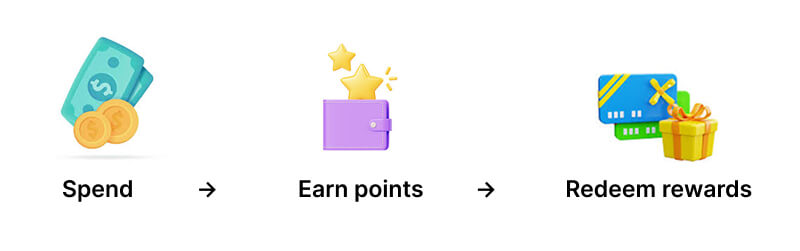
But EY’s research confirms that generational motivators, behaviors, and expectations have diverged sharply. Emotional connection matters to younger customers. Control and value matter more to older ones. And every group expects personalization, but on their terms.
This growing mismatch is why:
- Younger customers disengage despite being “members.”
- Middle-aged customers shop elsewhere for better value.
- Older customers ignore digital-first loyalty experiences.
Why Generational Personalization is No Longer Optional
Hyper-personalization only works when brands:
- Define clear age-based customer personas
- Track behavioral engagement over time
- Continuously evolve loyalty experiences year after year
That’s because each generation values loyalty differently, from channels and rewards to communication style and emotional connection. Let’s look at how each group actually behaves.
The Role of Data Trust in Generational Loyalty
One critical factor shaping loyalty success in 2026 is how different generations perceive data sharing and trust. EY’s research highlights that while personalization is expected across all age groups, comfort with sharing personal data varies significantly by generation.
Younger and mid-age customers are more open to sharing data, but only when there is a clear and immediate value exchange, such as personalized rewards, relevant recommendations, or faster redemptions. Older customers, however, prefer minimal data usage, transparency, and predictable benefits rather than deep personalization.
For brands, this means loyalty programs must:
- Clearly explain why data is collected
- Show how it improves the customer experience
- Allow customers to control preferences over time
The Loyalty Gap: Why Your 2023 Strategy Won’t Survive 2026
New loyalty data reveals a growing generational gap. We’ll now check the details below;
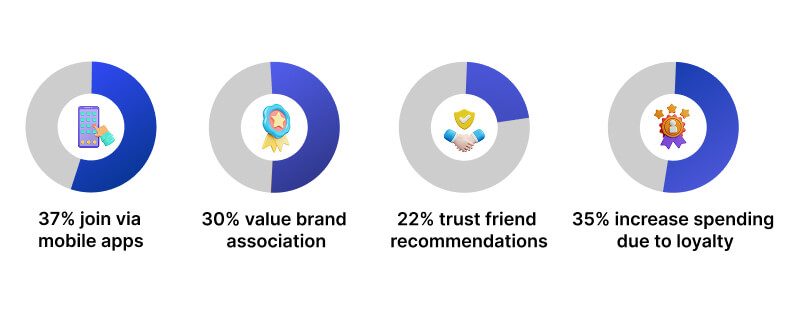
Connection Seekers (Ages 18–24)
For customers aged between 18 and 24, loyalty is emotional, social, and experiential
- 37% join programs via mobile apps; 22% still sign up in-store.
- Value brand association (30%) and friend recommendations (22%) are more than discounts.
- Interested in partner brands (23%) and enhanced services (18%).
- Only 35% increase in spending just for being in a program, down from last year.
What works for Connection Seekers:
Omnichannel continuity, referrals, brand partnerships, values-driven rewards
What fails:
Generic discounts and static point systems
Loyalty Enthusiasts (Ages 25–44)
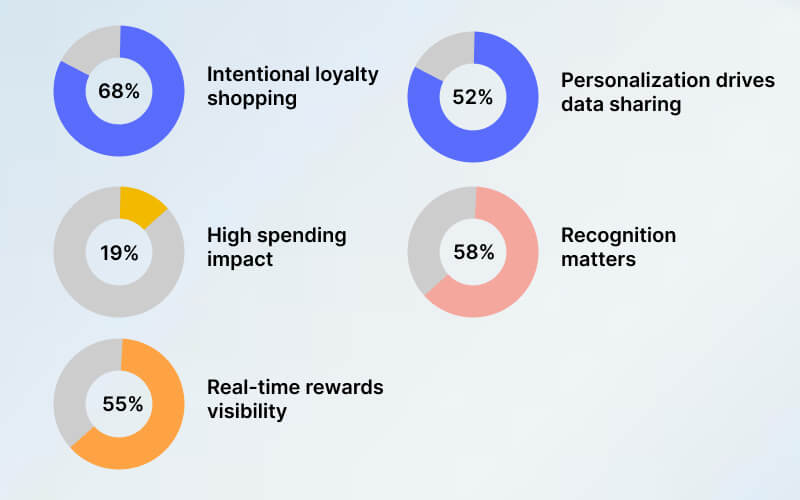
Loyalty is about recognition, progress, and relevance, which are the topmost priorities for customers aged between 25 and 44.
- 68% shop intentionally within loyalty programs.
- 19% are the most likely to significantly increase spending.
- 55% want real-time point tracking.
- 58% expect birthday rewards and recognition.
- 52% see product personalization as the top benefit of sharing data.
What works for Loyalty Enthusiasts:
Milestones, smart personalization, AI-driven engagement
What fails:
Delayed rewards, generic communications
Reward Commanders (Ages 45–54)
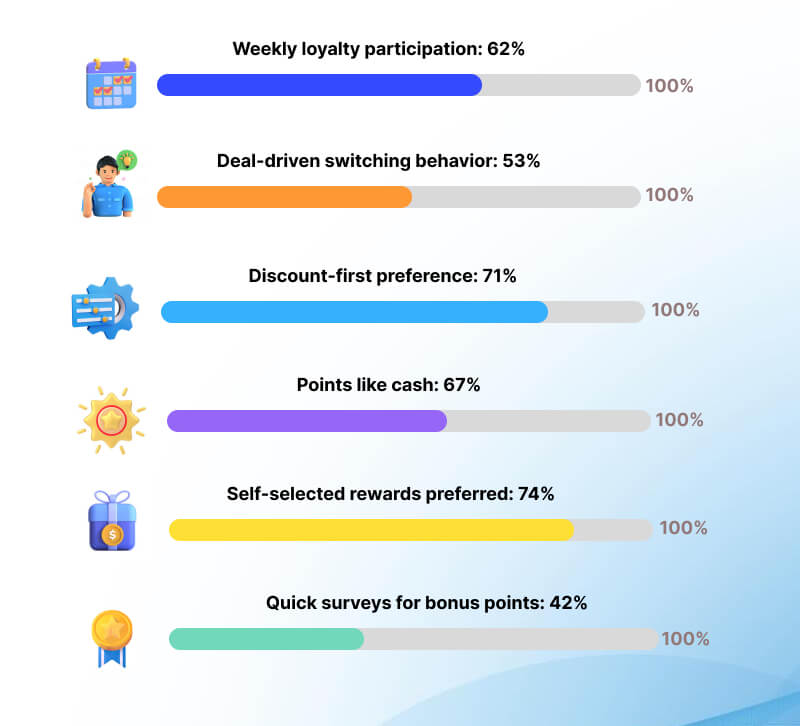
If we talk about middle-aged customers, for them, loyalty is about value, control, and instant rewards
- 62% participate weekly.
- 53% will shop elsewhere for a better deal.
- 71% prefer discounts; 67% want points like cash.
- 74% want to choose their own rewards.
- 42% are willing to complete short surveys for bonus points.
What works for Reward Commanders:
Choice-based rewards, instant gratification, and low redemption friction
What fails:
High redemption thresholds and forced curation
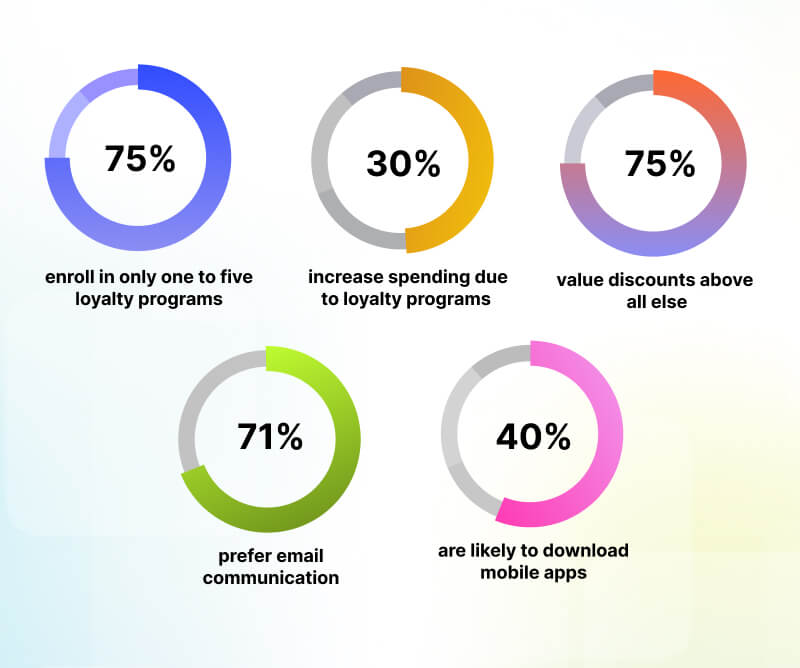
Loyalty Traditionalists (Ages 55+)
Customers who are above the age of 55 are known Loyalty Traditionalists. For them, loyalty is transactional, simple, and savings-driven
- 75% enroll in only one to five programs
- Only 30% increase their spending due to loyalty
- 75% value discounts above all else
- 71% prefer email communication
- Only 40% are likely to download mobile apps
What works for Loyalty Traditionalists:
Email-first offers, predictable savings, simplicity
What fails:
Gamification, app-heavy experiences, complex rules
Why Omnichannel Loyalty No Longer Means “Same Experience Everywhere”
Many brands still interpret omnichannel loyalty as delivering the same experience across mobile, in-store, email, and web. EY’s findings make it clear that this approach no longer works.
Each generation expects:
- Different entry points (apps, email, in-store)
- Different engagement depths (light vs. immersive)
- Different reward visibility and redemption flows
For example:
- Younger customers expect mobile-first journeys that still work seamlessly in-store
- Mid-age customers demand real-time access and control across channels
- Older customers prefer simple, email-driven engagement without digital complexity
True omnichannel loyalty in 2026 is about connected experiences, not identical ones. Brands that tailor channel usage by age group will see higher engagement and lower friction across the loyalty lifecycle.
The Loyalty Engagement Gap: How Behavior Changes by Age
Customer loyalty behavior shifts dramatically with age, from mobile-first engagement to value-driven participation. These shifts make generic loyalty programs ineffective.
| Age Group | Key Behavior | Percentage (%) |
| 18–24 | Join via mobile app | 37% |
| 25–44 | Shop intentionally in programs | 68% |
| 45–54 | Participate weekly | 62% |
| 55+ | Increase spending due to loyalty | 30% |
What If Brands Ignore These Differences?
As economic pressure increases, customers become more selective, not more loyal.
Brands that fail to adapt to the changes in customers’ preferences and choices will see:
- Lower engagement despite high enrollment.
- Increased churn across age groups.
- Loyalty programs are becoming cost centers instead of growth drivers.
Top Loyalty Strategies Brands Must Adopt in 2026
To stay relevant across generations, brands must move from one program to one loyalty program platform with multiple experiences:
- Persona-based loyalty design.
- Channel-specific engagement (app, email, in-store).
- Flexible reward frameworks.
- Real-time personalization powered by behavior.
- Continuous optimization, not static programs.
Conclusion: The Future of Loyalty is Flexible, Not Fixed
In this era, loyalty success won’t come from offering more rewards; it will come from offering the right experience to the right generation at the right time.
Brands that understand this shift will build loyalty that lasts. Those who don’t will keep wondering why engagement keeps dropping, despite putting so much effort.
At Novus Loyalty, we believe loyalty should adapt as customers evolve, across generations, industries, and channels. Because real loyalty isn’t one-size-fits-all. It’s personal. We help brands serve every customer personally according to their needs.
Explore Customer Loyalty
Design programs that increase customer lifetime value.