CRM and Loyalty – Strategy for Brands to Improve Customer Engagement in 2026
- Editorial & Research Team
- |
- Published on March 18, 2026
On this page
Share Article


- 73% of customers expect personalization, but only 33% receive it; this gap is where most brands lose engagement, despite having CRM systems and loyalty programs in place.
- Most businesses run CRM and loyalty programs separately, but real engagement begins when both systems work together to create seamless, personalized customer experiences.
- Customer engagement in 2026 is driven by real-time interactions, not delayed rewards. Speed, relevance, and timing now define how customers connect with brands.
- Data alone doesn’t build relationships; it’s how businesses activate that data through intelligent loyalty strategies that truly influence customer behavior and long-term retention.
- The future of engagement lies in AI-driven, omnichannel, and frictionless experiences, where brands move beyond transactions and start building meaningful, emotional customer connections.
According to a study, 73% of people expect personalization from brands, while only 33% feel the brands provide it. Studies show that by increasing repeat customers by 5%, companies can increase profits between 25%-95%.
But now here’s the real question: “If a company has the data, tools, and technology available to them, why is it that customer engagement is broken?” The reason is that most companies are collecting data for their customer relationship management (CRM) systems and running loyalty programs through their websites; however, very few are able to connect the two and produce a meaningful experience for the customer.
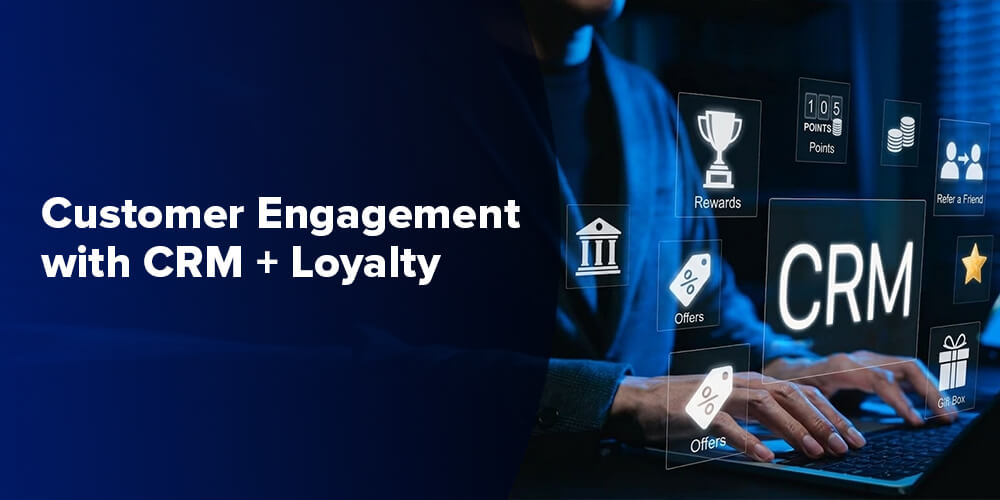
In 2026, customer engagement is no longer about campaigns or discounts. It’s about creating intelligent, real-time, personalized journeys. And that only happens when CRM and loyalty program strategy work as one system, not in silos.
Let’s unpack this in a way that’s easy to understand, practical to implement, and powerful enough to transform how businesses engage customers.
What Is CRM in 2026? (And Why It’s No Longer Just a Tool)
A Customer Relationship Management (CRM) system is where all your customer data lives. But in 2026, it’s much more than storage; it’s your decision-making engine.
It captures:
- Purchase history
- Browsing behavior
- Engagement patterns
- Preferences and feedback
- Communication history
But what makes modern CRM powerful is what it does with this data.
The Evolution of CRM
Earlier, CRM helped businesses track customers. Today, it helps businesses predict customer behavior.
Modern CRM systems:
- Identify customers likely to churn-
- Recommend the next best action
- Trigger automated engagement
- Enable hyper-personalized communication
Types of CRM You Must Understand (Analytical vs Operational)
Not all CRM systems serve the same purpose. Understanding the difference is key to building an effective engagement strategy.
1. Operational CRM
- Manages day-to-day interactions
- Campaign execution
- Customer communication
2. Analytical CRM
- Processes customer data
- Identifies patterns
- Predicts behavior
Operational CRM is known for execution, and Analytical CRM is known for intelligence. Together, these two create powerful loyalty programs.
What Is a Loyalty Program Strategy (And Why It Needs a Rethink)
Most people still think loyalty programs mean “earn points, redeem rewards.”
That model is outdated.
A loyalty program strategy is about:
- Influencing customer behavior
- Encouraging repeat interactions
- Building emotional connection
- Increasing lifetime value
The Problem with Traditional Loyalty Programs
- They are transactional
- Rewards feel generic
- There’s no personalization
- Engagement is delayed
- Customers lose interest quickly
What Works in 2026
Loyalty programs today are:
- Instant (real-time rewards)
- Personalized (based on behavior)
- Experiential (not just discounts)
- Integrated (across all channels)
- Engaging (gamification, tiers, communities)
In simple terms, loyalty is no longer about points—it’s about experiences.
CRM and Loyalty Programs: Why They Must Work Together
Here’s the simplest way to understand it:
- CRM = Intelligence
- Loyalty Program = Action
CRM tells you:
- Who your customer is
- What they like
- When they engage
Loyalty programs:
- Use that data
- Deliver rewards
- Influence behavior
What Happens Without Integration?
- CRM becomes passive data storage
- Loyalty programs become generic and ineffective
What Happens When They Work Together?
You create a continuous loop:
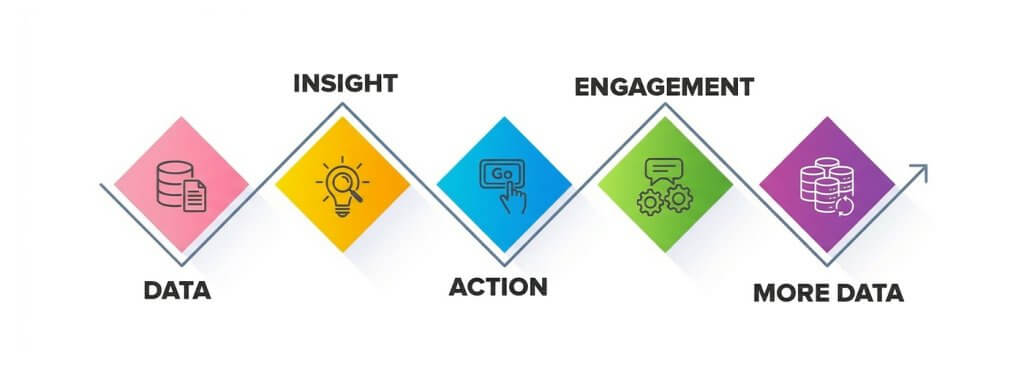
This loop is the foundation of modern customer engagement.
The Power of a Single Customer View
One of the biggest challenges businesses face today is fragmented customer data.
- Customers interact across multiple channels
- Data gets scattered
- CRM unifies everything into one profile
Impact:
- Better personalization
- Accurate targeting
- Seamless engagement
How CRM + Loyalty Strategy Drives Customer Engagement
Let’s break this into real, practical outcomes.
1. Hyper-Personalization at Scale
Customers don’t want to be part of a segment anymore. They want to feel understood.
With CRM + loyalty:
- Every offer is personalized
- Every reward is relevant
- Every message feels intentional
Example: Instead of sending the same discount to everyone, a brand can offer:
- Travel rewards for frequent travelers
- Cashback to high spenders
- Exclusive access to loyal customers
This level of personalization directly increases engagement.
2. Real-Time Customer Interaction
Speed matters.
Customers expect brands to respond instantly. CRM-enabled loyalty systems allow:
- Instant reward issuance
- Real-time campaign triggers
- Behavioral nudges
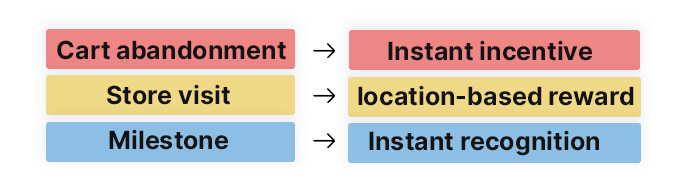
Example triggers:
3. Omnichannel Experience
Customers don’t think in channels. They think in experiences.
A connected CRM + loyalty system ensures:
- Seamless experience across app, website, store
- Unified rewards system
- Consistent messaging
This eliminates friction, and friction kills engagement.
4. Emotional Connection Over Transactions
This is where most brands fail.
Discounts drive transactions.
Experiences drive loyalty.
Modern loyalty strategies include:
- VIP tiers
- Early access
- Personalized experiences
- Community-based rewards
This builds emotional engagement, which is far more powerful than financial incentives.
CRM vs Loyalty Program: Key Differences
| Feature | CRM | Loyalty Program |
|---|---|---|
| Purpose | Manage customer data | Drive engagement and retention |
| Focus | Insights & analytics | Rewards & interactions |
| Role | Understand behavior | Influence behavior |
| Output | Segments, predictions | Offers, rewards, experiences |
| Dependency | Needs loyalty for activation | Needs CRM for intelligence |
How CRM + Loyalty Programs Improve Customer Retention
Customer retention is where real profitability lies.
With integrated strategies:
- Businesses can identify churn risks early
- Reward loyal customers effectively
- Maintain continuous engagement
Impact on Retention
- Higher repeat purchase rates
- Increased customer lifetime value
- Stronger brand relationships
Retention is not about keeping customers—it’s about giving them a reason to stay.
How They Help in Customer Acquisition Too
Most businesses overlook the fact that loyalty programs are not just for retention; they are powerful acquisition tools through
- Referral programs
- Social sharing incentives
- Reward-based onboarding
Industry-Wise Use Cases of CRM + Loyalty Strategy
While the principles of engagement are universal, the execution must be hyper-specific to the unique friction points and purchase cycles of your vertical
Travel & Hospitality
- Personalized travel rewards
- Tier-based loyalty (silver, gold, platinum)
- Experience-based benefits
Fintech
- Spend-based rewards
- Cashback ecosystems
- Partner-driven loyalty networks
E-commerce
- Behavior-driven offers
- Gamified engagement
- Dynamic reward systems
Retail
- Unified online + offline experience
- Instant rewards
- Personalized promotions
Food & Beverage
- Visit-based rewards
- Frequency incentives
- Subscription loyalty models
Key Trends Defining CRM and Loyalty Strategy in 2026
Success in 2026 is defined by moving away from static ‘earn and burn’ models toward an agile, predictive ecosystem that values customer time as much as customer spend.
1. AI-Driven Decision Making
AI is transforming both CRM and loyalty.
- Predicts customer needs
- Automates engagement
- Optimizes reward strategies
2. Zero-Party Data Becomes Critical
Customers are now willing to share data but expect value in return.
Loyalty programs help:
- Collect preference-based data
- Build trust
- Deliver relevant experiences
3. Micro-Engagements Replace Big Campaigns
Instead of large campaigns, brands now focus on:
- Small, frequent interactions
- Continuous engagement loops
4. Frictionless Loyalty Experiences
Customers don’t want to download apps or fill out forms.
Engagement is moving towards:
- Wallet-based loyalty
- WhatsApp-based interactions
- QR-driven experiences
This is where modern solutions—like those developed by teams such as Novus Loyalty—are helping businesses deploy quick, low-integration, high-impact loyalty ecosystems that actually work in real-world environments.
How CRM + Loyalty Strategy Works
Let’s make this extremely easy to visualize:
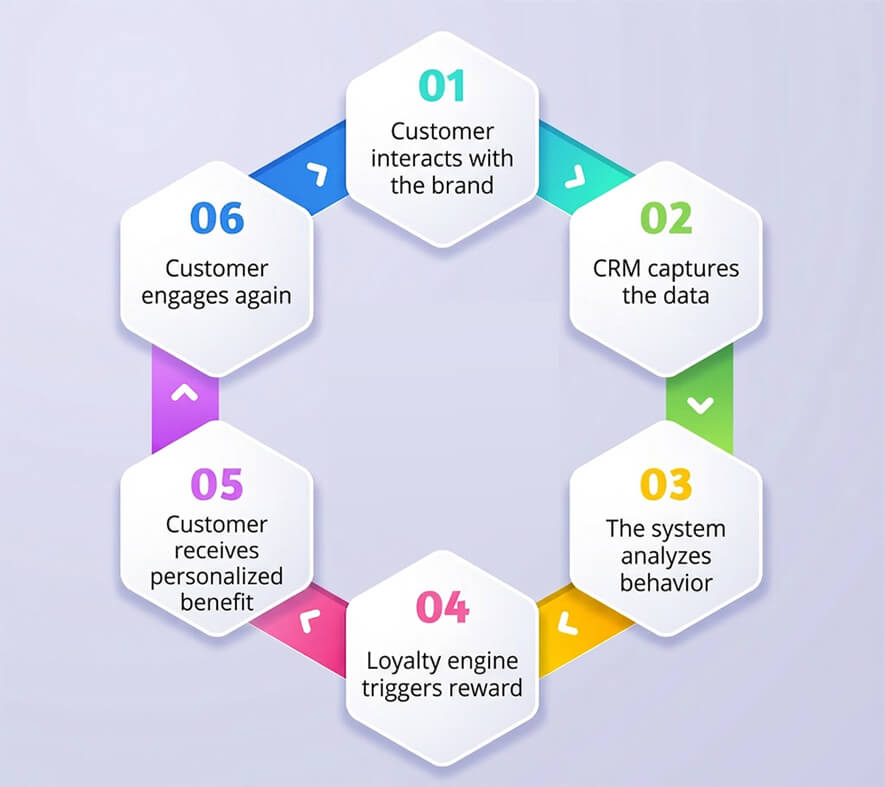
Customer Engagement Funnel Powered by CRM + Loyalty
| Stage | CRM Role | Loyalty Role |
|---|---|---|
| Awareness | Capture data | Offer a joining incentive |
| Engagement | Track behaviour | Provide relevant rewards |
| Conversion | Optimize journey | Reward purchase |
| Retention | Predict churn | Personalized offers |
| Advocacy | Identify promoters | Referral rewards |
Why Most CRM and Loyalty Strategies Still Fail
Below are the reasons;
- Data is collected but not used
- Loyalty programs are too generic
- No real-time engagement
- Systems are not integrated
Common Mistakes Businesses Still Make
Even in 2026, many brands struggle because they:
- Treat CRM as a reporting tool
- Run generic loyalty programs
- Ignore real-time engagement
- Fail to integrate systems
- Overcomplicate user experience
- Over-reliance on discounts
- Ignoring the customer lifecycle
- No feedback loop
- Lack of experimentation
What Smart Businesses Are Doing Differently
The most successful brands:
- Combine CRM insights with loyalty actions
- Focus on personalization
- Use AI for decision-making
- Engage customers continuously
- Reward behavior—not just transactions
The Role of Execution (Where Strategy Becomes Reality)
Having a strategy is one thing. Executing it is another.
Many businesses struggle with:
- Long implementation timelines
- Complex integrations
- Lack of agility
This is why modern loyalty ecosystems are moving towards:
- Faster deployment cycles
- Minimal IT dependency
- Scalable engagement models
Platforms like Novus Loyalty, for example, are designed to help businesses bridge this gap—by enabling real-time engagement, omnichannel experiences, and data-driven loyalty without heavy technical barriers.
The Future of Customer Engagement: What to Expect Beyond 2026
Looking ahead, we’ll see:
- Fully predictive engagement systems
- Emotion-based personalization
- Invisible loyalty (embedded in everyday experiences)
- Stronger ecosystem-based rewards
Customer engagement will become:
- More intuitive
- More human
- More seamless
Final Thoughts
Customer engagement is no longer about sending emails, running campaigns, or offering discounts. It’s simply about understanding customers deeply, acting on data instantly, and creating meaningful interactions. CRM and loyalty program strategy are no longer separate functions. They are two sides of the same system that drives modern customer engagement.
Explore Customer Loyalty
Design programs that increase customer lifetime value.