Customer Experience Automation (CXA) Guide: Every Business Needs in 2026
- Editorial & Research Team
- |
- Published on March 27, 2026
On this page
Share Article


- Nearly 75% of customers expect seamless experiences, yet fewer than half of businesses deliver, revealing a massive gap that’s quietly reshaping how brands are evaluated today.
- Competitors no longer shape customer expectations, but by the best experience they’ve ever had, raising the bar for every interaction, across every touchpoint.
- Traditional CX systems aren’t broken because of a lack of tools, but because they operate in silos, creating fragmented journeys that customers instantly notice.
- The shift to CX Automation is not just technological; it’s strategic, moving businesses from reactive support to proactive, real-time experience orchestration.
- The future of loyalty and engagement lies in intelligent automation, where every interaction feels personalized, timely, and connected, without customers ever seeing the complexity behind it.
People do not compare brands any longer based on the traditional concept of competition, but by experiencing the best possible brand experience from among those they have engaged with before.
For example, if someone has purchased from your competition and received a great in-store purchase experience, then the next time they will buy from you, that in-store purchase experience from your competition is now the benchmark by which they will judge you. They did not ask for your in-store purchase experience to become my new standard; it just happened.
Now add this to the picture. Nearly 48% of businesses admit their customer experience still falls short. Only around 31% believe they’re actually delivering something exceptional. At the same time, more than 75% of customers expect a consistent experience across every channel they use.
That’s not a small gap. It’s a growing disconnect. And this is exactly where Customer Experience Automation (CXA) starts to matter, not as a buzzword, but as a real shift in how businesses operate.
What is Customer Experience Automation (CXA)?
Fundamentally, customer experience automation entails the smarter and more seamless interaction of customers with each other, using the least amount of manual effort possible.
Customer experience automation includes AI, automation, data, and real-time information about who your customers are and what their journey consists of from beginning to end (as opposed to using multiple isolated tools). By integrating all of the tools into one unified flow, all data, decisions, and actions are working together.
In traditional customer service environments like CRM or marketing automation, there is an emphasis on specific parts of the customer’s entire journey. However, CXA takes an approach by focusing on the whole journey. By using technologies such as artificial intelligence (AI), machine learning (ML), and natural language processing (NLP), CXA can provide a better understanding of customer behavior, anticipate customer needs, and respond to those needs in a manner that is timely and relevant.
The most significant change is the shift in mindset. Historically, companies have waited until the customer contacted them for help before they take action; now, companies are taking action before there is an issue for the customer.
Why Traditional CX Models Are Failing
Despite heavy investments in CX tools, most businesses still struggle to deliver consistent experiences. The problem lies in how these systems are built and used.
Fragmented Customer Data
Customer data lives in multiple systems—CRM, marketing tools, support platforms, analytics dashboards. These systems rarely communicate effectively.
The result is a broken view of the customer. Without a unified profile, personalization becomes inconsistent and often irrelevant.
Reactive Support Systems
Most customer interactions still begin with a problem. Customers are expected to reach out, raise tickets, and wait.
This reactive model creates friction and delays. It also puts the burden of engagement on the customer instead of the brand.
Channel Silos
Customers move across channels effortlessly, but systems do not.
A conversation that starts on chat doesn’t carry over to email or phone. Customers are forced to repeat themselves, which leads to frustration and dissatisfaction.
Scalability Challenges
As businesses grow, managing customer experience becomes more complex.
Manual processes increase costs, slow down response times, and make it difficult to maintain consistency. Scaling experience becomes a challenge.
At the core, customer experience suffers because of disconnected systems, messy data, and a lack of intelligence.
The Shift: From Customer Support to CX Automation
Customer experience has evolved through distinct stages.
It started with customer support, focused on resolving issues. It moved into engagement, where brands aimed to interact more frequently. Then came experience management, which focused on improving journeys.
Now, we are entering the era of automation.
This shift represents a move from ticket resolution to journey orchestration. Businesses are no longer managing isolated interactions. They are designing entire experiences that adapt in real time.
Manual workflows are being replaced by AI-driven decision-making, and generic communication is giving way to hyper-personalized interactions.
CXA is not just a progression. It is a transformation in how businesses think about customer relationships.
How Customer Experience Automation Works
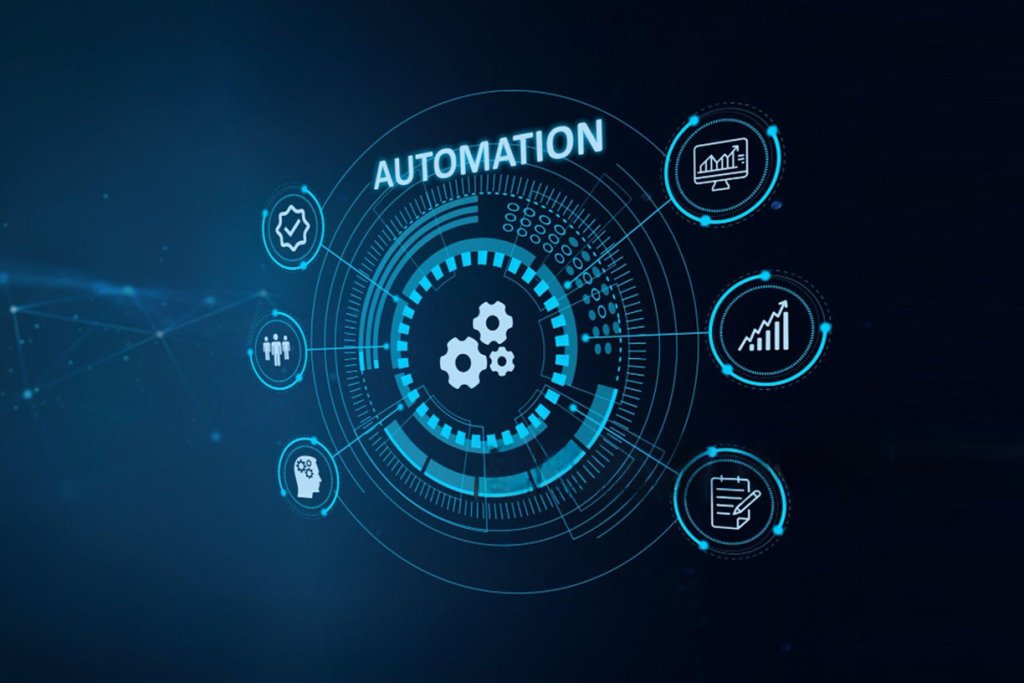
As we all know, Customer Experience Automation operates as a connected system built on five key pillars.
- At the foundation is a unified customer data layer, where all customer interactions, behaviors, and preferences are brought together to create a 360-degree view.
- On top of this sits the AI decision engine, which continuously analyzes data to determine the next best action for each customer.
- These decisions are executed through omnichannel orchestration, ensuring a seamless experience across platforms like apps, websites, messaging channels, and in-store interactions.
- Automation workflows trigger actions based on behavior, enabling real-time engagement without manual effort.
- Finally, a continuous learning loop ensures that every interaction improves the system. Customer behavior feeds insights, which drive better decisions and ongoing optimization.
Key Technologies Powering CX Automation
The advanced technologies that comprise the foundation of CXA all collaborate. AI-enhanced systems leverage decision-making through experience, and ML provides experience-based improvements to those decisions over time. NLP allows for the interpretation of human communications as input for the model.
The use of CAI assists with the automation of responses from Chatbots and Voice Assistants. Predictive analytics provides insights into the future behaviour of a customer or user. CDPs help to combine data from multiple platforms into a single source of truth. By working together, these technologies give businesses the ability to anticipate a customer’s needs and solve problems before they occur instead of after they occur.
Top Benefits of CX Automation
The impact of CXA is both operational and strategic.
Businesses that implement CX automated systems usually see an up to 30% decrease in their service cost and efficiency will replace many manual services or operates and improve substantially. Over 90% of customers expect personalized or individualized services to be delivered so implementing CXA within a company will allow the business to deliver that personalization at scale.
Responses times and support response can all be made instantaneous or faster. Businesses can provide 24/7 support without increasing their operational costs. Research has shown that implementing advanced CX will allow businesses to improve customer retention rates by 20-25% as a result of feeling understood and appreciated now by the business.
Also, the application of CXA provides consistency between the service and brand experience when using multiple channels during a customer’s journey with a brand.
Real-World Use Cases of CX Automation
CXA has begun to change how companies do business across many sectors.
Customer service is being provided instantaneously by artificial intelligence-powered chatbots that provide customers with answers to their questions, cutting down wait time and increasing efficiency. AI-enabled recommendation engines are providing a significant portion of revenue in the e-commerce space today, with some platforms achieving as much as 35% of total revenue from AI-impacted recommendations.
Onboarding experiences will continue to be increasingly guided and simplified to help users adopt solutions faster. Predictive systems are enabling companies to address customer concerns prior to them being reached out to by a customer.
Businesses are gaining insights into emotions through customer feedback and sentiment analysis, allowing businesses to react accordingly in real-time.
In addition, CXA is redefining customer loyalty by allowing companies to build behavior-based loyalty/rewards programs, rewards/coupons that are customized to demographics, continuous engagement with customers, and turning individual transactions into long-term customer relationships.
Common Challenges in CX Automation
Although CXA presents considerable advantages, it additionally poses a danger.
Inefficient execution of automated services may lead to unsatisfactory outcomes and result in a frustrating experience rather than an enjoyable one. Excessive attempts at assuaging the customer experience may render it mechanical and thus impersonal due to the inability of an individual representative to assist in the event of a mechanical failure.
Compliance with consumer data protection is also of importance because, as businesses become more reliant on consumer data, achieving compliance becomes much more critical and will require transparency.
There is a strategic threat associated with this risk; nearly one in three firms will experience significant losses in future growth opportunities because of ineffective execution of automated solutions. Identifying what constitutes a successful deployment of CXA solutions is critical to the success of any organisation.
Best Practices for a Successful CX Automation Strategy
A strong CXA strategy begins with a unified data foundation. Without clean and connected data, even the best systems fail.
Businesses should focus on designing customer journeys before selecting tools. This ensures that technology supports experience rather than dictating it.
A hybrid model that combines AI with human interaction delivers the best results, balancing efficiency with empathy.
Personalization should be meaningful and relevant, not excessive. At the same time, a privacy-first approach is essential to maintain trust.
In fact, most CX leaders agree that the balance between AI and human interaction is critical to success.
Latest Trends in CX Automation (2025–2026)
The evolution of customer experience is happening at an increasing pace across industries. An increasing number of organizations anticipate a future in which they engage with customers by way of automation for a large majority of their customer contact.
Agentic AI represents a powerful trend that allows businesses to create systems that can subsequently act independently and proactively. The sophistication of hyper-personalization is also increasing, as it not only uses real-time behavior data but also uses characteristics of customers in order to establish more accurate segments for marketing purposes than traditional methods have provided.
The combination of automation and human support in the developing hybrid model is continuing to gain traction, and privacy-first approaches will become a critical component of the growing data-conscious society.
These trends lead us to believe that the future of customer experience will not only be managed, but also continuously optimised.
CX Automation vs CRM vs Marketing Automation
To understand CXA clearly, it helps to compare it with traditional systems:
| Aspect | CRM | Marketing Automation | CX Automation |
|---|---|---|---|
| Focus | Data storage | Campaign execution | End-to-End experience |
| Approach | Reactive | Scheduled | Real-time, productive |
| Personalization | Limited | Ruled based | AI- driven |
| Scope | Sales | Marketing | Full customer journey |
When Do Businesses Need CX Automation?
The need for CXA becomes evident when businesses begin to scale.
High customer volumes, declining retention, disconnected systems, and rising operational costs are clear indicators. Low engagement levels and inconsistent experiences further highlight the gap.
At this stage, manual processes are no longer sufficient. CXA becomes essential to maintain quality while scaling efficiently.
How CX Automation Connects with Loyalty & Engagement

The customer experience continues to evolve after the transaction. Throughout the customer lifecycle, CXA will allow companies to reward customer behavior, personalize experiences, and foster long-term relationships through meaningful interactions over time. Loyalty will change from being a static program to being a dynamic experience.
Rewards based on behavior, gamification, and personalized offers become part of the overall experience, rather than separate initiatives.
CXA not only creates satisfaction, but also creates long-term loyalty and engagement.
Introducing a Modern CX Automation Platform
As companies move toward CXA, it is important to have a unified technology platform that connects all aspects of the CXA, which includes data, AI, automation, and engagement.
New technology platforms like Novus provide a comprehensive solution that offers an integrated approach for loyalty, engagement, and automation within one unified ecosystem. This allows companies to create seamless and intelligent customer journeys while eliminating and simplifying the challenges that arise from managing multiple solutions.
Final Thought
Customer expectations will continue to rise. That is inevitable. What will define success is how businesses respond. Customer Experience Automation is no longer optional. It is becoming the foundation of modern customer strategy. Brands that adopt it intelligently will not only meet expectations but exceed them. In a world where experience defines perception, CXA is not just an advantage. It is the difference between being chosen and being forgotten.
Explore Customer Loyalty
Design programs that increase customer lifetime value.