Behind Every Delivery: India’s Gig Workers and the Retention Reality
- Editorial & Research Team
- |
- Published on February 18, 2026
On this page
Share Article


- India’s gig workforce is projected to grow from 7.7 million to 23.5 million by 2030, reshaping employee engagement and redefining retention strategies nationwide.
- Income instability, algorithmic pressure, and safety risks are emerging as silent retention disruptors in India’s platform-driven gig economy.
- Policy reforms like the Code on Social Security 2020 signal change, but significant implementation and protection gaps still influence gig worker engagement.
- Loyalty frameworks can evolve from customer rewards to structured workforce engagement systems that directly impact gig worker retention and brand trust.
- By 2026, brands that prioritize dignity, safety, and recognition for gig workers will hold a measurable advantage in performance stability and workforce continuity.
According to NITI Aayog in its India’s Booming Gig and Platform Economy 2022 policy brief, in 2020–21, 7.7 million Indians were engaged in the gig economy. By 2029–30, that number is projected to reach 23.5 million; nearly three times the growth in less than a decade.
Now pause for a second. If 23.5 million workers power food deliveries, cab rides, logistics, and home services, are we still going to talk about employee engagement as if it applies only to full-time payroll staff?
This is no longer an HR side topic. Gig worker engagement is the new employee engagement conversation in India. And brands that fail to see this shift will struggle with retention, service quality, compliance risk, and public trust in 2026 and beyond.
Let’s break this down; clearly, honestly, and from a worker-first perspective.
What Exactly Is a Gig Worker?
Before we discuss engagement and loyalty, we need clarity.
Gig workers are individuals who earn income outside traditional employer–employee contracts, including platform-based workers (Swiggy, Zomato, Uber, Ola, Blinkit, Zepto) and non-platform freelancers. According to NITI Aayog, 47% of these jobs are medium-skilled, 31% are low-skilled, and 22% are high-skilled, with the workforce largely falling between 18 and 45 years.
The Engagement Crisis No One Talks About
Gig work offers flexibility. That’s true. But it also brings structural instability.
1. Income Volatility
Platform-based pay structures often change. Incentives fluctuate. Surge pricing varies. Workers can’t predict their monthly income.
2. Algorithmic Pressure
Ratings, penalties, and auto-assignments create invisible supervision. A sudden account suspension can mean immediate loss of income.
3. No Paid Leave
- Sick? No income.
- Family emergency? No income.
- Festival season? More work, more pressure.
4. Mental Health Strain
High-speed delivery expectations, especially during “10-minute delivery” pushes, have triggered widespread concern. The Union Labour Ministry have discouraged unsafe hyper-fast delivery practices due to road safety risks. The Kerala Motor Vehicles Department was among the first to issue notices to delivery firms, directing them to follow road safety rules and cease putting undue pressure on riders, following a rise in traffic violations.
Delivery partners frequently report:
- Anxiety over ratings
- Fear of deactivation
- Long working hours
- Road accidents due to time pressure
When income, identity, and app rating are deeply linked, psychological stress increases. Research across labour platforms globally highlights elevated stress and insecurity in algorithm-driven work environments.
5. Women in the Gig Economy
Women gig workers face:
- Safety concerns
- Late-night shifts risk
- Limited social protection
There have even been collective protests, including app switch-offs, demanding fairer conditions.
This is not just an operational issue. It’s an engagement and dignity issue.
Why Gig Worker Engagement = Employee Retention Strategy
Here’s the reality:
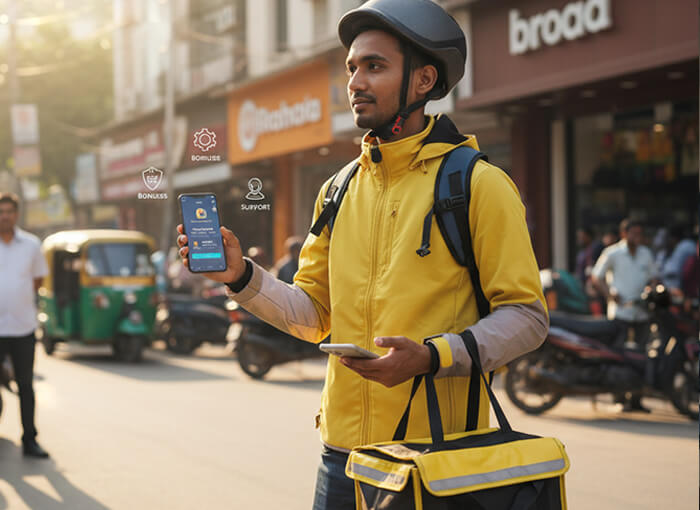
Platforms call gig workers “partners.” Customers call them “delivery boys” or “drivers.” But brands depend on them like employees.
If gig workers disengage:
- Delivery times rise
- Customer experience suffers
- Brand ratings drop
- Operational costs increase
- Churn increases
Retention in gig platforms is already a major challenge. Workers frequently switch between platforms seeking better incentives.
If you are an HR leader or business owner in India, here’s the uncomfortable question:
Can you afford a workforce of millions that feels replaceable and unrecognised?
The Policy Landscape: What’s Changing?
India has taken steps. The Code on Social Security, 2020, includes provisions for gig and platform workers. It enables:
- Life and disability insurance
- Health benefits
- Old-age protection
- Government welfare schemes
Workers can register on the e-Shram portal. There is increasing discussion around extending health protection schemes like Ayushman Bharat in the Union Budget 2025-26.
But implementation remains gradual. By the end of 2026, platforms may face:
- Greater regulatory scrutiny
- Mandatory social security contributions
- Transparency requirements in pay algorithms
- Safety and accident insurance compliance
The future will reward platforms that act early, not those that wait for regulation.
How Social Security Funding for Gig Workers Will Actually Work
While recognition under the Code on Social Security, 2020, marked a policy milestone, what often goes unnoticed is how gig worker social protection is expected to be financed.
Under the Code, aggregators, which include ride-hailing platforms, food delivery apps, and digital marketplaces, may be required to contribute 1% to 2% of their annual turnover, subject to a cap of 5% of the amount paid to gig and platform workers. This contribution is intended to fund social security schemes for registered gig workers.
This marks a structural shift. For the first time, platform businesses are expected to share responsibility for worker welfare without creating a traditional employer–employee classification.
Several states have also begun exploring gig worker welfare boards and dedicated funds. These initiatives indicate that gig work is gradually moving toward semi-formal recognition within India’s labour ecosystem.
What does this mean for businesses?
It means engagement is no longer just cultural; it is becoming financial and regulatory. Platforms that proactively build structured engagement, insurance integration, and welfare-linked loyalty systems will be better prepared for compliance transitions. Those who delay may face operational and reputational risks.
In the coming years, workforce formalisation may not necessarily mean full employment classification. Instead, India may move toward a hybrid model, where flexibility remains, but social security obligations increase.
So Where Do Loyalty & Engagement Programs Fit In?
This is where things get interesting. Traditionally, loyalty programs focus on:
- Customers
- Channel partners
- Employees
But what if gig workers are your most critical engagement layer? An employee-centric loyalty framework for gig workers can include:
1. Earn & Burn Reward Points
- Points for completed deliveries
- Bonus for safe driving
- Points for consistent ratings
- Redeemable for fuel vouchers, insurance, and healthcare credits
2. Tier-Based Recognition
Bronze → Silver → Gold → Platinum delivery partner status, with increasing benefits:
- Priority orders
- Higher incentive multipliers
- Training access
- Health benefits add-ons
3. Skill Badges & Micro-Certification
As suggested in the NITI Aayog report, platforms can introduce “Skill Passports” or digital badges. This builds dignity and long-term employability.
4. Emergency Support Funds
Corpus funds for accident coverage, similar to certain platform initiatives during COVID.
5. Mental Health & Wellness Incentives
Helplines. Counselling partnerships. Paid wellness credits.
Where Platforms Fall Short Today
Let’s address this openly. Major platforms have scaled rapidly. But recurring concerns include:
- Opaque incentive structures
- Sudden account suspension
- Weak grievance redressal
- Limited voice representation
- No guaranteed minimum income
Public perception matters. If brands want sustainable growth, they must move from transactional engagement to human engagement.
Platform Shortcomings vs Policy Gaps Table
The table given below will give you clarity about the gig workers’ status
| Platform-Level Challenge | Current Ground Reality | Policy Position | Gap That Remains |
|---|---|---|---|
| Income volatility | Dynamic incentives & surge pricing | Code on Social Security recognizes gig workers | No guaranteed minimum earning mandate |
| Accident Risks | Delivery pressure, road exposure | Accident insurance recommended under CoSS 2020 | Implementation inconsistent across states |
| Account Suspension | Algorithm-driven deactivation | No standardized grievance redressal law | Lack of due process clarity |
| No Paid Leave | Work = pay model | Social security schemes proposed | No mandatory paid leave norms |
| Mental Health Stress | Rating-based pressure | Not formally addressed in labour framework | No mental health compliance structure |
The Year 2026: What the Data Suggests
Based on growth projections mentioned in the report:
- Gig workforce crosses 20 million+
- High-skilled gig roles expand
- Women participation gradually rises
- Pressure for formalization increases
We may see:
- Platform-worker unions becoming stronger
- State-level gig welfare boards
- Mandatory accident insurance
- Better wage transparency norms
The platforms that integrate structured engagement and loyalty models will experience:
- Lower churn
- Higher performance stability
- Better brand trust
How Brands Can Build Harmony Through Loyalty
Let’s simplify this. Engagement is not a bonus program. It is a structural commitment. A strong gig engagement strategy should include:
| Engagement Pillar | Why It Matters | Loyalty Integration |
|---|---|---|
| Income Stability | Reduces anxiety | Guaranteed base + variable rewards |
| Safety | Reduces accidents | Incentives for safe behaviour |
| Recognition | Builds belonging | Tier status, badges |
| Social Security | Builds trust | Insurance-linked rewards |
| Career Path | Increase retention | Skill upgrade rewards |
This is where structured engagement ecosystems, like those designed by brands such as Novus Loyalty, can support platforms in building measurable retention frameworks. Not as a marketing gimmick, but as a strategic infrastructure layer connecting performance, recognition, and welfare. And it must be data-driven.
Are Gig Workers Really Just “Partners”?

Around the world, there is ongoing discussion on whether gig workers should be considered employees for legal purposes. The lines between contractor and employee are still being drawn by courts, governments, and platforms. This changing perception of platform-based labour is reflected in discussions surrounding the Code on Social Security, 2020 in India as well.
But beyond legal definitions lies a more important truth, a moral and economic reality.
Gig workers are the face of your brand. Customers don’t see algorithms, surge pricing models, or backend dashboards. They see the delivery partner at their doorstep. They see the driver navigating traffic. They experience the human interaction, not the technology behind it.
When a delivery is delayed, when service feels rushed, or when behaviour reflects stress, the brand absorbs the impact. That is why engagement cannot be optional. Whether classified as independent contractors or employees, gig workers directly influence customer loyalty, brand perception, and long-term retention metrics.
If platforms want sustainable growth, they must stop viewing engagement as a compliance checkbox and start seeing it as a strategic necessity.
Behind Every Delivery: The Human Reality
Now let’s step away from business strategy for a moment.
Imagine riding for 10–12 hours a day. Tracking targets on your phone. Watching your ratings closely. Avoiding traffic risks. Racing against delivery timers. Competing with thousands of others logged into the same app. All of this, without paid leave, fixed income, or guaranteed safety coverage.
Would you feel secure? Would you feel valued? Would you stay loyal?
Engagement programs for gig workers in India are not about flashy reward mechanics or gamified dashboards. At their core, they are about dignity, stability, safety, and long-term trust. They are about acknowledging that behind every completed order is a person navigating economic uncertainty and social pressure.
By 2026, India’s gig ecosystem will be too large to ignore. With projections estimating over 23.5 million gig workers in the coming years, engagement will move from being a “good-to-have” initiative to a foundational business requirement.
The brands that will lead this transformation are the ones that understand a simple principle: loyalty is not reserved for customers alone. It must extend to the people who power the system every single day.
If we genuinely care about employee engagement and retention in India, the conversation must begin with the millions driving, delivering, servicing, and supporting the digital economy.
The future of work isn’t approaching; it is already here. The real question is whether we are prepared to engage it responsibly.To know more about employee engagement loyalty
Explore Employee Loyalty
Run recognition and reward programs to improve employee retention.