CSR & Employee Engagement: The Retention Strategy Companies Are Overlooking
- Editorial & Research Team
- |
- Published on February 12, 2026
On this page
Share Article


- Nearly 70% of employees are more likely to stay in purpose-driven companies, and highly engaged workplaces experience up to a 43% lower turnover rate. CSR directly influences retention stability.
- CSR becomes truly effective when it’s participatory and fun; gamified sustainability challenges and volunteer rewards turn impact into pride, belonging, and deeper emotional commitment.
- When CSR participation connects to loyalty points, recognition, and rewards, it creates a powerful loop of impact, appreciation, engagement, and long-term employee loyalty.
- With turnover costing between 50% to 200% of annual salary, even modest CSR-driven engagement improvements can generate substantial long-term financial savings.
- The future of retention lies in purpose infrastructure; organizations embedding CSR into data-driven loyalty platforms will outperform those relying solely on compensation.
Nearly 70% of employees say they’re more likely to stay with a company that has a strong purpose, and organizations with high employee engagement experience up to a 43% lower turnover rate.
That’s not a coincidence. It’s the power of Corporate Social Responsibility (CSR) done right.
In a time when U.S. businesses are battling quiet quitting, disengagement, and rising talent mobility, CSR is no longer a branding exercise. It’s a workforce strategy. When embedded into culture, not just campaigns, CSR directly influences employee engagement, organizational commitment, and long-term retention.
Let’s break this down in a way that makes sense, whether you’re an employee wondering why purpose matters at work, or a business leader trying to reduce attrition without simply raising salaries.
What Is CSR And Why Should Employees Care?
Corporate Social Responsibility (CSR) refers to a company’s commitment to operate ethically while contributing positively to society, the environment, and its workforce. It’s not just charity. It’s a structured impact aligned with business values.
The Core Types of CSR
Before connecting CSR to engagement and retention, let’s understand its main pillars:
- Environmental Responsibility – Sustainability efforts, carbon reduction, conservation.
- Community & Social Impact – Volunteering, local partnerships, education initiatives.
- Ethical Practices & Governance – Transparency, fair labor, compliance.
- Diversity, Equity & Inclusion (DEI) – Creating equitable workplaces.
- Employee-Centric CSR – Paid volunteer time, CSR participation programs, skills-based volunteering.
When these initiatives are integrated into company culture, employees don’t just work for a paycheck; they work for a purpose. And that changes everything.
CSR Activity Ideas That Drive Employee Engagement

CSR only drives retention when employees actively participate. Research on employee engagement consistently shows that involvement, not observation, builds commitment.
Here are evidence-backed CSR activity formats that consistently improve engagement:
- Volunteer Time Off (VTO): Paid time for employees to volunteer in causes of their choice.
- Skills-Based Volunteering: Employees contribute professional expertise to nonprofits.
- Environmental Challenges: Internal sustainability competitions (waste reduction, green commuting).
- Payroll Giving Programs: Structured donation matching initiatives.
- Community Days: Company-wide impact events.
- Employee-Led CSR Committees: Empowering employees to select causes.
Studies on employee engagement consistently show that participative CSR initiatives generate stronger emotional commitment than passive donation-only models.
“CSR must be experienced — not observed.“
The Real Link: CSR → Engagement → Retention
Here’s what research consistently shows:
Employees who believe their company’s CSR efforts are meaningful report higher job satisfaction, stronger organizational commitment, and lower intention to quit.
A 2024 study published in the International Journal of Research in Management examined how CSR participation affects employee engagement and retention. Using regression analysis, the study found:
| Independent Variables | Unstandardized Coefficient (B) | Standard Error | Standardized Beta (β) | t-value | p-value |
|---|---|---|---|---|---|
| CSR Participation Level | 0.452 | 0.087 | 0.41 | 5.195 | 0 |
| Perceived CSR Impact | 0.364 | 0.091 | 0.331 | 4 | 0.001 |
| Job Satisfaction | 0.298 | 0.079 | 0.287 | 3.772 | 0.002 |
| Organizational Commitment | 0.285 | 0.102 | 0.22 | 2.794 | 0.007 |
| Constant | 1.121 | 0.215 | – | 5.214 | 0 |
Source – International Journal of Research in Management:
Link: https://www.managementpaper.net/archives/2024/vol6issue1/PartA/7-2-27-765.pdf
The model showed strong statistical significance, reinforcing that employees who actively participate in CSR programs are more likely to stay engaged and remain with the organization.
From the same research:
- 42% of employees consistently participate in CSR activities.
- 31% believe CSR initiatives create a very strong societal impact.
- 68% report being satisfied or very satisfied with their jobs.
- 66% say they are likely or very likely to stay for the next two years.
The message is clear: When employees see impact, they stay.
Why CSR Works on a Psychological Level
CSR satisfies three fundamental employee needs:
- Purpose – Employees want meaningful work.
- Belonging – Shared values build a stronger emotional connection.
- Pride – Working for a responsible organization enhances identity.
Studies analyzing U.S. administrative workforce data show that employees who value CSR are significantly less likely to leave organizations aligned with their values. Value alignment acts as a non-monetary benefit — one that money alone cannot replace.
And this is particularly powerful across generations.
CSR Across Generations: It’s Not Just a Gen Z Trend
Yes, Gen Z and Millennials prioritize purpose. But research shows CSR influences retention across all age groups.
In the 2024 academic study sample:
- 35% of respondents were aged 24–34
- 26% were aged 34–44
- 20% were 44+
Engagement with CSR was consistent across career stages. Purpose is no longer a “young employee” demand. It’s a universal workforce expectation.
When CSR Fails!
Here’s the uncomfortable truth: Not all CSR improves engagement.
Research in corporate communication shows that CSR communication strategy matters as much as CSR activity itself.
If CSR feels performative, unclear, or disconnected from daily work, employees disengage.
Some common pitfalls:
- CSR is used only for branding.
- No transparency about impact.
- No employee involvement in choosing causes.
- No recognition for participation.
CSR must be:
- Authentic
- Visible
- Measurable
- Employee-inclusive
Otherwise, it becomes noise.
The Business Case: Retention Is a Financial Strategy
Employee turnover in the U.S. can cost anywhere from 50% to 200% of an employee’s annual salary, depending on role complexity.
Now consider this:
When CSR participation increases, turnover intention decreases significantly. CSR isn’t a cost center. It’s a retention lever.
Companies that embed CSR into HR strategy experience:
- Higher engagement
- Stronger employer branding
- Improved organizational identity
- Reduced attrition risk
In competitive industries like retail, structured CSR combined with strong leadership has been shown to positively influence employer branding and employee retention outcomes.
Where Employee Loyalty Programs Fit Into This Picture
CSR builds emotional loyalty. Employee loyalty programs reinforce recognition and consistency when these two strategies intersect; engagement multiplies.
For example:
- Recognizing employees for volunteer milestones.
- Rewarding CSR participation with internal recognition points.
- Linking sustainability initiatives with performance-based incentives.
- Creating internal leaderboards for community engagement.
This is where structured employee engagement platforms play a role. Purpose needs operational support.
Organizations that integrate CSR tracking, recognition, and rewards into employee loyalty systems create a closed loop:
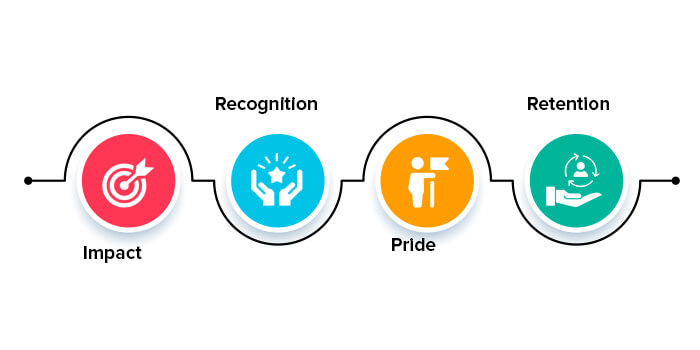
At Novus Loyalty, we recognize that “Purpose” is the fuel, but “Recognition” is the engine. We have created a digital ecosystem that connects social responsibility with everyday work life:
- Milestone Visibility: Transform volunteer hours into celebrated milestones on an internal social feed.
- Gamified Impact: Use leaderboards for sustainability challenges, turning “green habits” into a team-building exercise.
- Integrated Rewards: Link CSR participation directly to your existing loyalty points system, allowing employees to redeem “purpose-driven points” for tangible rewards.
- Data-Driven Insights: Provide HR leaders with the Cronbach’s Alpha-level reliability they need by tracking real-time participation vs. turnover risk.
“The key is integration, not isolation.”
How CSR Integrates Into Modern Loyalty Platforms

Modern organizations are no longer treating CSR as a parallel HR initiative. Instead, they are embedding CSR participation directly into employee loyalty and engagement ecosystems. The shift is from passive impact to participatory impact.
Today’s platforms allow employees to:
- Convert recognition points into charitable donations
- Choose causes aligned with their personal values
- Participate in sustainability challenges tied to rewards
- Track volunteer milestones within engagement dashboards
- Join time-bound CSR campaigns with matched impact
Choice is critical. When employees can select the causes they support, participation becomes personal, not procedural.
This integration transforms CSR from a corporate announcement into an interactive experience. And interactive purpose drives deeper engagement.
CSR Loyalty Framework
To move from intention to measurable impact, CSR must follow a structured loyalty-driven framework:
- Purpose Alignment: Identify causes that align with organizational values — while also giving employees the ability to support causes meaningful to them personally.
- Participation Enablement: Design structured initiatives such as volunteer days, sustainability challenges, donation matching campaigns, and skills-based impact programs.
- Personalization & Choice: Allow employees to choose where to direct contributions or rewards. Personal relevance increases emotional investment.
- Recognition Integration: Embed CSR participation into the recognition system, points, badges, leaderboards, and milestone acknowledgments.
- Communication and Transparency: Regularly communicate campaign outcomes, funds raised, volunteer hours contributed, and environmental impact achieved.
CSR without communication fades. CSR with visible impact multiplies engagement.
CSR Use Cases Aligned with Loyalty & Rewards
Below are 3 structured CSR + reward models that organizations can implement to strengthen engagement and employee loyalty.
“Impact Points” Volunteer Rewards Program
The Idea
Create a structured system where employees earn loyalty points for verified CSR participation — and those points can be redeemed for meaningful rewards.
How It Works
- 1 volunteer hour = X internal points
- CSR event participation = bonus points
- Skills-based volunteering = higher point multiplier
- Quarterly top contributors receive experiential rewards
Reward Options
- Convert points into charity donations
- Redeem for eco-friendly gift cards
- Experience rewards (retreats, workshops, learning credits)
- Extra paid time off
- Public recognition badges
Why It Engages Employees
It gamifies impact without reducing it to a gimmick. Employees feel seen for doing good, not just for hitting KPIs.
Why It Promotes Loyalty
Recognition builds emotional attachment.
Purpose + appreciation = retention driver.
Sustainability Challenge with Team-Based Rewards
The Idea
Turn sustainability into a friendly competition across departments.
Example Campaigns
- Green commute month
- Zero-waste challenge
- Energy-saving initiative
- Paperless pledge program
Loyalty Integration
- Teams earn points for participation milestones
- Leaderboards are displayed on the internal platform
- Monthly “Green Champion” awards
- Winning teams receive shared rewards (team lunch, bonus experience, recognition ceremony)
Why It Engages
When structured thoughtfully, competition boosts participation, visible recognition fuels pride, and shared team involvement cultivates lasting workplace belonging.
Business Benefit
It reinforces Environmental, Social, and Governance (ESG) values internally while building cultural cohesion.
Matched Impact Campaign with Reward Multiplier
The Idea
Launch CSR drives where the company matches employee contributions — and rewards participation.
Example
- Employees donate points to a cause
- Company matches 1:1
- Participation unlocks loyalty bonuses
Gamification Layer
- Unlock collective milestones (e.g., “If we reach 500 volunteer hours, the company will fund an additional grant”)
- Department-level impact dashboards
- Recognition for top “Impact Leaders.”
Why It Works
Matching contributions amplifies perceived impact, making employees feel their efforts carry double the value, and psychologically increasing their likelihood to participate.
Technology Enablement: Turning CSR Into Measurable Strategy
Technology enables CSR to move from symbolic activity to structured engagement architecture. Modern platforms allow organizations to:
- Launch CSR campaigns digitally
- Automate volunteer hour logging
- Enable seamless reward-to-donation conversions
- Run matched contribution drives
- Track participation by department or location
- Share real-time impact dashboards
Without technology, CSR impact remains anecdotal. With digital enablement, CSR becomes data-backed and scalable.
This is where employee engagement ecosystems, like those developed by Novus Loyalty, create value by connecting purpose-driven initiatives with structured recognition systems. Integration ensures CSR isn’t isolated. It becomes part of everyday work life.
ROI of CSR Loyalty Programs
CSR loyalty integration strengthens both emotional commitment and behavioral engagement. While CSR is purpose-driven, its organizational benefits are tangible:
- Increased participation in engagement initiatives
- Higher job satisfaction
- Strengthened value alignment
- Reduced turnover intention
- Improved employer brand perception
When CSR participation is embedded into structured reward ecosystems, it creates positive reinforcement loops:
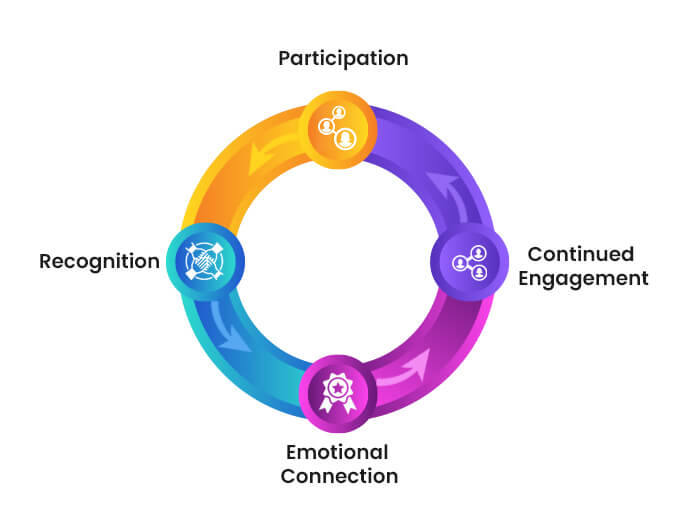
Given the high financial cost of employee turnover, even modest reductions in attrition, driven by increased engagement and purpose alignment, can produce significant long-term cost efficiencies.
CSR loyalty programs are not simply about doing good. They are about designing engagement systems that sustain loyalty.
Benefits of CSR for Business and Employees
CSR creates a dual impact:
For Employees:
- Greater sense of purpose
- Stronger emotional connection
- Enhanced pride in the workplace
- Personal development through volunteering
For Businesses:
- Improved retention
- Stronger employer brand
- Better talent attraction
- Measurable engagement outcomes
- Enhanced ESG reporting credibility
It’s one of the rare strategies where employee well-being and business performance align.
Building a Culture of CSR and Engagement
CSR cannot be seasonal. It must be cultural. Building a culture of CSR requires:
- Leadership endorsement
- Employee-driven initiatives
- Transparent communication
- Structured recognition
- Continuous measurement
When CSR is embedded into daily operations, it stops being a program and becomes an identity. And identity is what retains people.
Measuring CSR Impact on Engagement
If you can’t measure it, you can’t manage it. Effective CSR measurement includes:
- Participation rates
- Employee perception surveys
- Job satisfaction scores
- Retention intention metrics
- Correlation analysis between CSR engagement and turnover data
The 2024 study reported a Cronbach’s Alpha of 0.84, indicating strong reliability in measuring CSR’s effect on engagement and retention variables. That level of consistency strengthens the case that CSR outcomes are not anecdotal; they’re measurable.
What 2026 Looks Like for CSR & Retention
Looking ahead:
- Purpose-driven employer branding will influence hiring decisions more than compensation alone.
- ESG reporting will increasingly include workforce engagement metrics.
- CSR will shift from marketing departments to HR strategy rooms.
- Companies will use data-driven engagement platforms to connect impact with employee recognition.
CSR will move from “initiative” to “infrastructure.”
And organizations that fail to embed purpose into culture will struggle with retention in a workforce that values meaning as much as money.
Final Thought
In the end, CSR is no longer just a line item in an annual report; it is a critical driver of employee loyalty.
When companies/organizations authentically embed ethical, social, and environmental practices into their culture, they build a workforce that feels valued and proud. Simply, this alignment creates a simple, powerful chain reaction, i.e., purpose drives engagement, engagement drives commitment, and commitment drives retention.
For leaders, CSR is a strategic workforce investment, a way to build a workplace that employees never want to leave. For employees, it simply means working somewhere that mirrors their values and not just their skillset.
Wrapping it with a prediction that organizations that embrace this shift will keep their best talent and build a lasting legacy.
Explore Employee Loyalty
Run recognition and reward programs to improve employee retention.